
You decide whether to fire up the grill for a quick, high-heat sear or tend to a smoker for low-and-slow flavor development — both deliver great results, but they suit different goals. If you want fast, charred steaks or burgers, grilling wins; if you want deep smoke flavor and fall-apart tenderness for brisket, ribs, or pulled pork, smoking is the better choice.
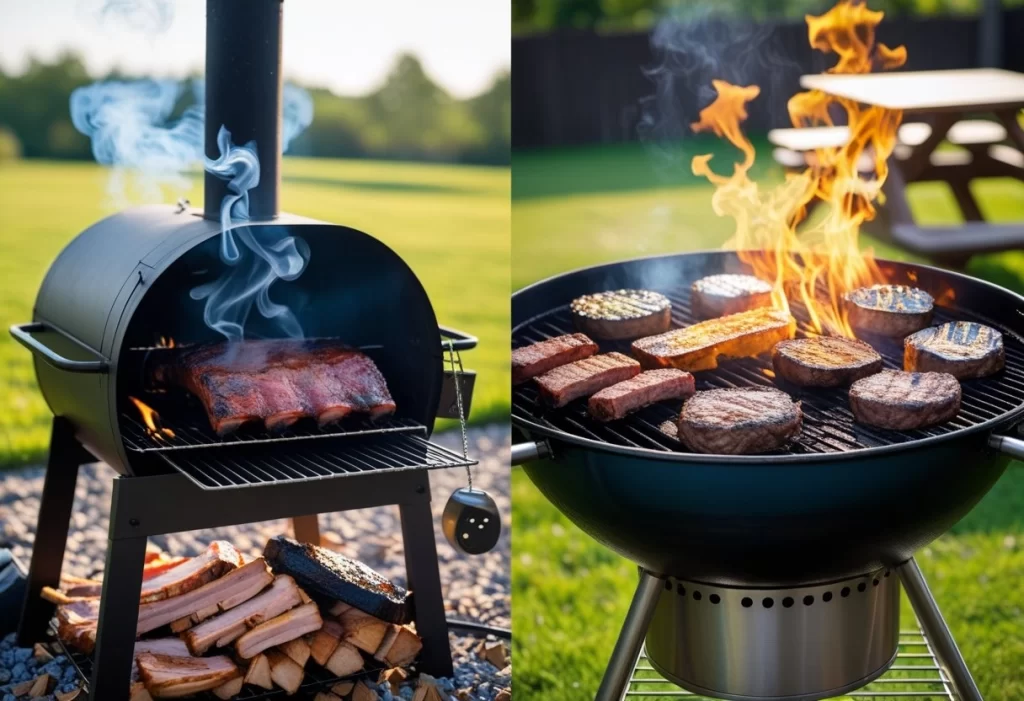
This article walks through how each method works, the equipment and techniques you’ll need, how flavors and textures differ, and practical trade-offs like time, cost, health, convenience, and environmental impact. Use this guide to match your meal, schedule, and priorities to the right cooking method so your next cookout hits the mark.
Understanding Smoking and Grilling
You’ll learn how smoking uses low heat and wood smoke for long, tender cooks, while grilling uses high, direct heat for fast searing and shorter cook times. Both rely on fire, but they differ in temperature, equipment, timing, and the cuts of meat you should choose.
Definition of Smoking
Smoking uses indirect heat and controlled wood smoke to cook food slowly, typically between 200°F and 275°F.
You place meat away from the direct flame and maintain steady temperatures for hours to break down collagen and connective tissue.
Wood choice matters: hickory, oak, apple, and cherry each add distinct flavors.
Fatty or tough cuts—brisket, pork shoulder, ribs—benefit most because long exposure to smoke and low heat converts collagen into gelatin, yielding tender texture.
Equipment ranges from offset smokers and bullet smokers to pellet grills and smoke boxes.
You monitor temperature with a probe, manage airflow, and add wood or pellets gradually to sustain smoke without excessive soot.
Definition of Grilling
Grilling cooks with direct, high heat—typically 350°F up to 550°F or more—for short periods.
You position food directly over coals or gas burners to develop a seared crust and Maillard browning.
Thin or tender cuts work best: steaks, burgers, chicken breasts, fish, and vegetables.
Quick cooking preserves juiciness when you watch doneness and avoid overcooking.
Grills include charcoal, gas, and infrared styles; each provides different heat control and flavor.
You use direct and sometimes two-zone setups to sear then finish without burning.
Key Differences Between Smoking and Grilling
Temperature and time: smoking = low (200–275°F) and long (hours); grilling = high (350–550°F+) and short (minutes to an hour).
Heat type: smoking uses indirect heat and circulating smoke; grilling uses direct radiant heat.
Flavor development differs: smoking imparts wood-derived smoke compounds over time; grilling emphasizes crust and char from high heat.
Cuts and technique differ: choose tougher, fattier cuts for smoking and tender, quick-cooking cuts for grilling.
Equipment and management vary: smokers require airflow control, smoke generation, and steady temp management.
Grills require immediate heat control, proximity to flame, and frequent attention to searing and flare-ups.
Practical trade-offs: smoking demands planning and longer cook windows; grilling fits quick meals and high-heat finishes.
You can combine methods—reverse sear or smoke-then-sear—to get benefits of both when you need flavor and crust.
Techniques and Equipment
You’ll choose gear and methods based on time, temperature control, and the flavor intensity you want. One method relies on low, steady heat and smoke for hours; the other uses direct, high heat for quick searing and shorter cook times.
Smoking Methods and Gear
Use a dedicated smoker (vertical, offset, barrel, or pellet) or a charcoal grill set up for indirect heat with a water pan. Maintain 200–275°F for most meats; brisket and pork shoulder often cook at the lower end for longer periods.
Control airflow with vents to stabilize temperature and burn rate. Add wood chunks or chips—hickory, oak, apple, or cherry—depending on desired smoke character. Soak chips only when using simple chip boxes; avoid soaking chunks in most smokers.
Bring a good digital probe thermometer and log ambient temps with a grill thermometer or Wi‑Fi probe to avoid guesswork. Plan for fuel: lump charcoal offers faster heat-up and cleaner burn, while charcoal briquettes provide steadier long burns. Prepare for long cooks by trimming excess fat, using rubs or brines, and wrapping (Texas crutch) when stall occurs to speed finishing.
Grilling Tools and Approaches
Choose a gas, charcoal, or hybrid grill and match the approach to the cut: high heat and direct flame for steaks, burgers, thin fish, or vegetables; indirect zones for bone-in chicken or thick chops. Aim for 450–600°F for searing, and set up two‑zone fire (one hot side, one cooler side) for flexibility.
Use tongs and a spatula—avoid piercing meat with forks to preserve juices. A cast-iron skillet or griddle on the grill expands use for seafood and delicate items. Keep a high‑quality instant-read thermometer to pull food at target doneness; carry a spray bottle of water for flare-ups.
Clean grates after preheating and oil them lightly to reduce sticking. Rotate and rest meats: short rests for steaks, longer rests for larger roasts to redistribute juices.
Flavor Profiles and Food Results
Smoking builds deep, layered smoke flavors and long connective-tissue breakdown. Grilling produces quick Maillard browning and a bright, charred surface.
Taste Differences
Smoking imparts smoky phenols and subtle sweetness from wood—hickory gives robust bacon-like notes, apple adds mild fruitiness, and mesquite delivers intense earthiness. Those flavors penetrate slowly, so you taste smoke through the meat, not just on the surface.
Grilling emphasizes Maillard reactions and caramelized fats. You get immediate savory crust, concentrated beefy or pork notes, and a lightly bitter char when sugars scorch. Marinades and finishing sauces show more vibrancy because you cook fast at high heat.
Consider seasoning: salt and low-sugar rubs help smoke penetrate, while sugar-heavy glazes work better for short, high-heat grilling to avoid burning.
Texture and Appearance
Smoking breaks down collagen over hours, yielding fork-tender, pull-apart textures in brisket, pork shoulder, and ribs. The exterior forms a “bark”—a dark, flavorful crust from rubs and smoke deposition. Slice smoked meats across the grain to preserve tenderness.
Grilling locks juices quickly and preserves a firmer bite. Steaks and chops show defined grill marks, a browned crust, and a pink interior when cooked to medium-rare. Thin proteins—fish fillets, shrimp, thin steaks—stay succulent if you avoid overcooking.
Appearance-wise, smoked meats are uniformly colored with a smoke ring beneath the surface. Grilled items display contrasting char lines and a glossy finish from brushing with oil or sauce.
Best Foods for Smoking
Choose large, collagen-rich cuts that benefit from long cooking: beef brisket, pork shoulder, whole chickens, and beef short ribs. These cuts turn tough collagen into gelatin over low heat and absorb smoke deeply.
Use tougher game meats and fatty cuts like lamb shoulder or whole ducks; the slow process renders fat and concentrates flavor. Hardier fish—salmon, tuna—also take smoke well when kept intact or in thicker portions.
Avoid ultra-lean, thin cuts (tilapia, thin pork chops) unless you use a cold-smoke method or wrap them. For vegetables, root vegetables, winter squash, and whole onions take smoke gracefully and gain a savory depth.
Best Foods for Grilling
Grill thin-to-medium cuts that benefit from searing: ribeye, strip steaks, pork chops, lamb chops, and bone-in chicken pieces. High heat creates a flavorful crust while maintaining a juicy interior.
Seafood that grills well includes tuna steaks, shrimp skewers, swordfish, and salmon steaks. Use firm textures so pieces hold together on the grate. Vegetables that char quickly—corn, bell peppers, zucchini, asparagus—get intensified sweetness and textures that contrast grilled proteins.
Use direct heat for quick cooking and indirect heat for thicker cuts. Apply sauces during the last minutes to avoid burning, and rest meats briefly to let juices redistribute.
Time and Temperature Considerations
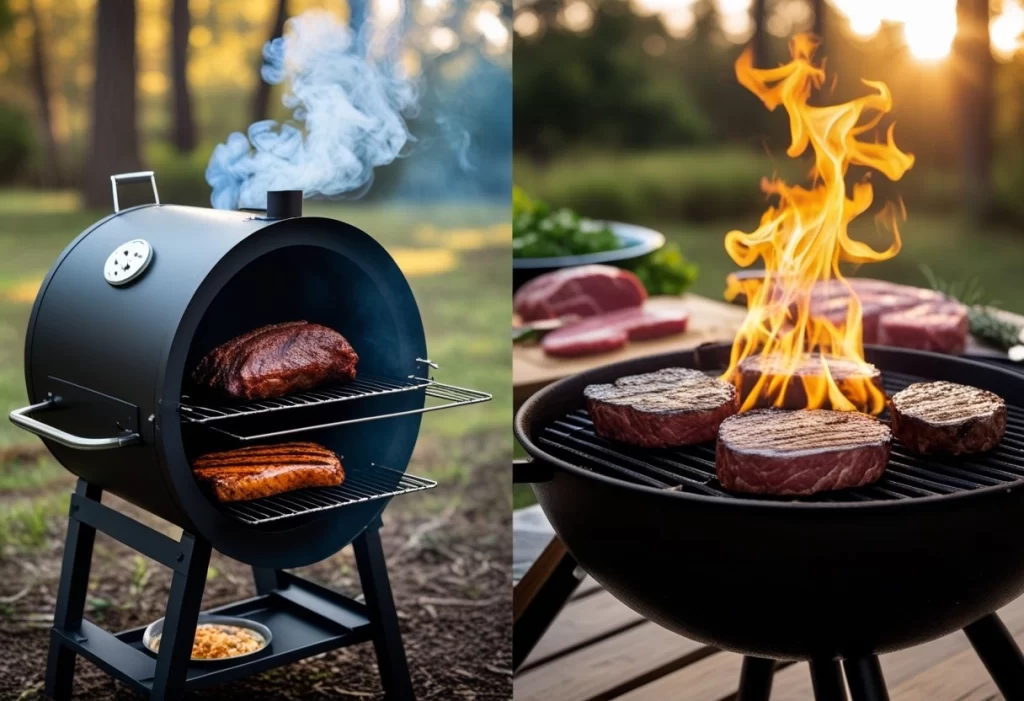
You need to match time and temperature to the cut and the technique: smoking uses low, sustained heat over hours for connective-tissue breakdown; grilling uses high, direct heat for quick searing and shorter cook times.
Cooking Duration
Smoking typically runs from 4–16 hours depending on cut and size.
Think 4–8 hours for pork shoulder or ribs, and 8–16 hours for brisket.
Internal temperature targets matter more than clock time; aim for 195–205°F (90–96°C) for pulled pork and brisket to achieve tender meat.
Grilling usually takes minutes to an hour.
Thin steaks, burgers, and chicken breasts cook in 5–15 minutes with direct high heat.
Thicker cuts or bone-in pieces may need 20–45 minutes using a two-zone method (sear over high heat, finish over indirect heat).
Use a reliable probe thermometer and track internal temperature rather than relying solely on time.
Rest meat after cooking: 10–20 minutes for steaks, 20–60 minutes for large smoked cuts to redistribute juices.
Heat Management
Smoking: maintain a steady low temperature, commonly 225–250°F (107–121°C).
Control comes from fuel amount, airflow (dampers), and periodic fuel/top-ups.
Use wood for flavor—fruitwoods and hickory change smoke intensity—add chunks rather than continuous heavy smoke to avoid bitterness.
Grilling: manage high direct heat (450–700°F / 232–371°C) for searing, with an indirect zone at 300–350°F (149–177°C) for finishing.
Set up two heat zones by piling coals or using burners: one side on high, the other off or low.
Keep lid closed to stabilize temperature; open only to flip or check doneness.
Monitor temperature with built-in or wireless thermometers.
Adjust fast for grilling (move food, change burners) and make incremental changes for smoking (small damper moves, adjust fuel) to keep heat in range.
Health and Nutrition Comparison
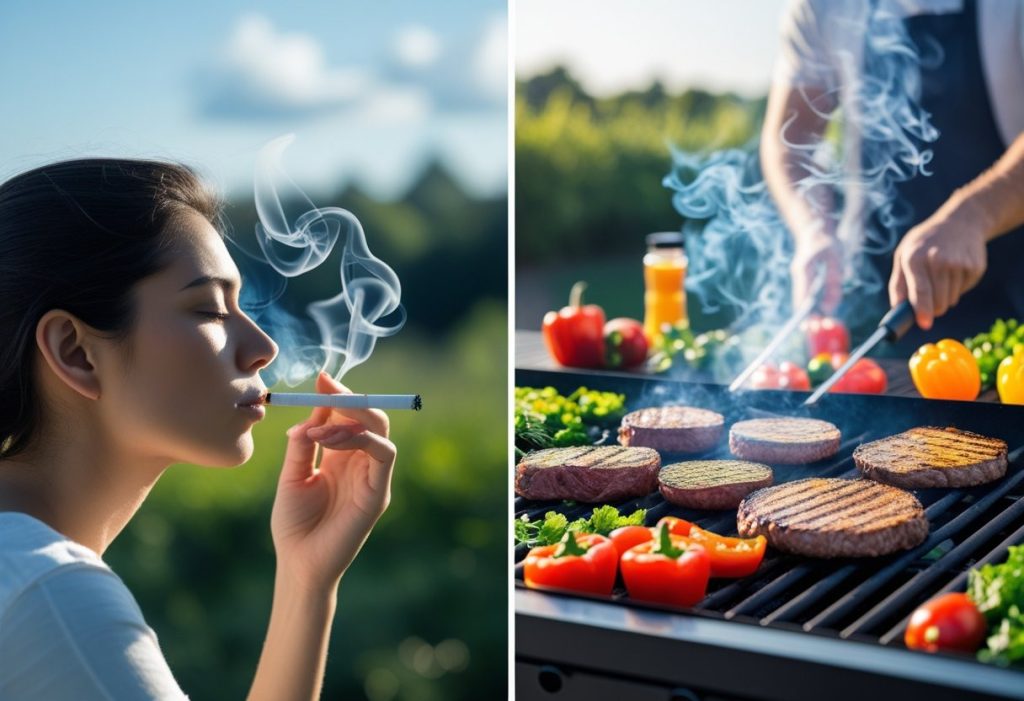
Grilling and smoking affect nutrient retention, fat content, and formation of harmful compounds in different ways. Your choice changes cooking time, temperature, and exposure to smoke — each alters flavor and health outcomes.
Nutritional Differences
Grilling uses high, direct heat and short cook times. That helps preserve water-soluble vitamins (like B vitamins) in lean cuts and vegetables because you cook quickly and drain less juice. Grilling also lets fat drip away from meat, which can lower total fat and calories per serving compared with pan-frying.
Smoking uses low temperatures over many hours. Slow cooking retains more internal moisture and can preserve some nutrients that would be lost to fast, high heat. Smoking does not remove as much surface fat, so fatty cuts may remain higher in calories unless you trim beforehand. Wood smoke can add phenolic compounds that have antioxidant properties in small amounts, but their contribution to nutrition is minor compared with macronutrients and vitamins.
Health Risks and Benefits
High-heat grilling can create heterocyclic amines (HCAs) and polycyclic aromatic hydrocarbons (PAHs) when muscle meat chars. Those compounds associate with increased cancer risk in epidemiological studies, so minimizing charring matters. You can reduce risk by using lower direct heat, flipping frequently, marinating (which can cut HCA formation), and trimming excess fat.
Smoking exposes food to combustion byproducts over long periods, which can increase PAH deposition on the surface. Cold smoking (no or low cooking heat) carries additional food-safety risks if pathogens aren’t controlled. Benefits of both methods include reduced added fats when compared with frying, and the ability to cook nutrient-dense protein and vegetables that fit a balanced diet. Practical controls — trimming fat, avoiding heavy charring, using lean cuts, and moderate portion sizes — lower risks while keeping flavor.
Convenience and Practicality
Smoking requires more time, attention, and space; grilling demands quick heat and simpler cleanup. Both need basic tools, but they differ sharply in setup complexity, fuel management, and how well they fit different occasions.
Setup and Cleanup
Smoking needs a stable smoker, fuel supply (charcoal, wood, or pellets), and often a water pan or drip tray. You’ll plan for several hours of cook time, monitor temps with a probe thermometer, and occasionally add fuel or wood to maintain a steady 225–275°F. Cleanup involves dumping ash, wiping grease out of racks, and emptying drip trays or water pans.
Grilling usually uses a gas or charcoal grill and heats to 400–600°F in minutes. You’ll preheat for 10–15 minutes, oil grates, and cook fast. Cleanup is faster: scrape grates, empty a small ash catcher (charcoal) or wipe the grease tray (gas). For both methods, keeping a grill brush, disposable foil, and a grease-safe container for ash speeds cleanup.
Suitability for Various Occasions
If you’re feeding a crowd at a weekend party, smoking excels—you can cook large cuts like brisket or whole pork shoulder ahead and hold them in a cooler or warm box. Smoking lets you serve consistent quantities over several hours without constant attention once temps stabilize. Space and time are the trade-offs: you’ll need room for the smoker and advance planning.
For weeknight dinners or quick gatherings, grilling fits better. You can sear steaks, burgers, or vegetables in minutes and adjust portions on the fly. Portable gas or charcoal grills also work well for tailgates, picnics, or small patios where you need rapid setup and minimal lingering smoke.
Cost Implications
You’ll face different upfront and ongoing expenses depending on whether you choose a smoker or a grill. Expect higher initial equipment cost for many smokers and variable recurring costs for both methods.
Initial Equipment Investment
Smokers typically cost more if you want reliable temperature control and build quality. A basic offset smoker or charcoal kettle can start around $150–$300, but quality pellet or cabinet smokers with digital controllers usually run $400–$1,500. Gas and charcoal grills span a wide range: a basic gas grill can be $150–$400, while premium stainless-steel models exceed $1,000. If you value precision, add a digital thermometer ($30–$150) and possibly a water pan or drip tray. You should also budget for accessories like grates, covers, and a firebox toolset. Factor in installation or setup costs if you need a dedicated pad or shelter for larger units.
Ongoing Costs
Fuel and consumables differ sharply between methods. Smoking often uses wood chunks, logs, or pellets; expect $10–$30 per 20–40 lb bag of wood pellets and more if you buy specialty woods. Long smokes increase consumption, so weekly costs rise with frequency. Grilling fuel includes propane tanks ($15–$30 to refill) or charcoal ($15–$30 per 10–20 lb bag). Charcoal briquettes and lump charcoal burn faster than gas but cost similarly over time. Both methods require replacement parts and maintenance: grates, burners, seals, and rotisserie motors may need periodic replacement ($20–$200). If you use smoking woods or premium charcoal often, plan for higher recurring expenses than simple gas grilling.
Environmental Impact
You’ll weigh differences in fuel sources, direct emissions, and longer-term sustainability when choosing between smoking and grilling. Consider both the immediate smoke and the fuel lifecycle to judge environmental cost.
Fuel Types Used
Different fuels have distinct carbon footprints and resource impacts. Charcoal briquettes release more CO2 per cook than natural gas; they require cutting and processing wood, and many briquettes include additives that increase emissions. Lump charcoal is slightly cleaner than briquettes but still comes from wood harvests.
Natural gas and propane burn cleaner on-site, producing fewer particulates and less CO2 per unit of heat than charcoal. Electricity for electric smokers or grills shifts emissions to the grid; your local electricity mix (coal vs. renewables) determines the real impact. Wood chips and chunks used for smoking add flavor but create particulate matter and VOCs; using sustainably sourced wood reduces land‑use pressure.
Tips to reduce impact:
- Choose natural gas/propane or electric where grid is low‑carbon.
- Prefer certified sustainable lump charcoal or hardwood from managed forests.
- Use wood chips sparingly and avoid treated woods or pallet scraps.
Emissions and Sustainability
Smoking typically generates longer, cooler combustion and more smoke particulates over hours, increasing fine‑particle and polycyclic aromatic hydrocarbon (PAH) output. Those pollutants affect air quality locally and can settle on food, so manage smoke volume and ventilation when you smoke for extended periods.
Grilling, especially with charcoal, produces intense, short bursts of combustion and higher instantaneous CO2 and soot emissions. Gas grills emit far fewer particulates and lower CO2 per cook session compared with charcoal, though methane leaks in the supply chain can offset some benefits. Electric units avoid on‑site combustion but shift emissions based on your utility’s mix.
Practical steps to lower emissions:
- Use a gas grill or electric smoker if you want lower on‑site particulates.
- Maintain equipment to improve fuel efficiency and reduce leak losses.
- Limit cook times and avoid flare‑ups; trim excess fat to cut smoke production.
Summary and Key Takeaways
You choose grilling when you want fast, high-heat cooking with a seared exterior and pronounced char flavor. Grilling works best for steaks, burgers, thin cuts, and vegetables; it uses direct heat and takes minutes to an hour.
You choose smoking when you want low-and-slow cooking that develops deep smoke flavor and tender texture. Smoking suits tougher cuts like brisket, pork shoulder, and ribs; it uses indirect heat and can take many hours.
Bold differences at a glance:
- Heat & Time: Grilling = high heat, short time. Smoking = low heat, long time.
- Flavor: Grilling emphasizes Maillard browning and char. Smoking emphasizes wood-derived smoke complexity.
- Equipment & Technique: Grilling needs a hot grate and quick attention. Smoking needs temperature control, airflow, and fuel management.
Use a wireless or instant-read thermometer to ensure safe, consistent results. Internal temperature matters more than clock time for doneness and food safety.
Match method to cut and goal: choose grilling for speed and crust; choose smoking for tenderness and depth. Experiment with wood types, rubs, and temps to dial in flavor for your tastes.