
Brisket and pulled pork stand as titans of American barbecue, each commanding fierce loyalty from pitmasters and diners alike. Both demand patience, skill, and respect for the craft. Yet they differ in nearly every way that matters: cut, cook time, texture, and the sauces that complement them best.

Brisket delivers a firmer bite with deep smoke penetration and a peppery bark, while pulled pork offers tender, shreddable meat that welcomes vinegar-based sauce or a sweeter BBQ sauce depending on regional tradition. The choice between a brisket sandwich and a pulled pork sandwich often reveals more about geography than personal taste. Texas pitmasters guard their brisket secrets like state treasures, while Carolina joints build reputations on whole hog and tangy vinegar mops.
Understanding which one suits a particular meal requires more than preference. It demands knowledge of how each meat behaves when smoked, sliced, sauced, and served alongside cornbread and baked beans at a proper barbecue restaurant or backyard gathering. The techniques that elevate one can ruin the other.
Why Reheating Brisket Can Go Wrong – Fast
Brisket walks a tightrope between perfection and disaster when reheated. The margin for error is razor-thin.
The primary culprits include:
- Heat exposure – Too much direct heat transforms tender meat into leather
- Moisture loss – Fat renders out quickly, leaving dry, stringy fibers behind
- Time miscalculation – Even five extra minutes can ruin hours of smoking
The lean portions suffer first. While the point cut retains some fat protection, the flat becomes parched in minutes without proper technique.
Microwaves deserve special mention as brisket’s nemesis. They heat unevenly and evaporate moisture at an alarming rate. What emerges resembles cardboard more than barbecue.
Temperature matters immensely. Cranking the oven past 325°F speeds up the process but guarantees a dried-out result. Low and slow remains the golden rule, even during reheating.
| Problem | Result | Speed |
|---|---|---|
| Direct high heat | Tough, dry meat | Under 10 minutes |
| No moisture added | Crumbly texture | 15-20 minutes |
| Microwave use | Rubbery consistency | 3-5 minutes |
Commercial operations face this challenge daily. Professional caterers know that reheating brisket demands the same respect as the initial cook. Skip the fundamentals, and guests notice immediately.
The fat cap that protected the meat during smoking won’t save it from aggressive reheating. Once those juices escape, they’re gone for good. No amount of sauce masks truly overcooked brisket.
Whole vs. Sliced: Start With the Right Format
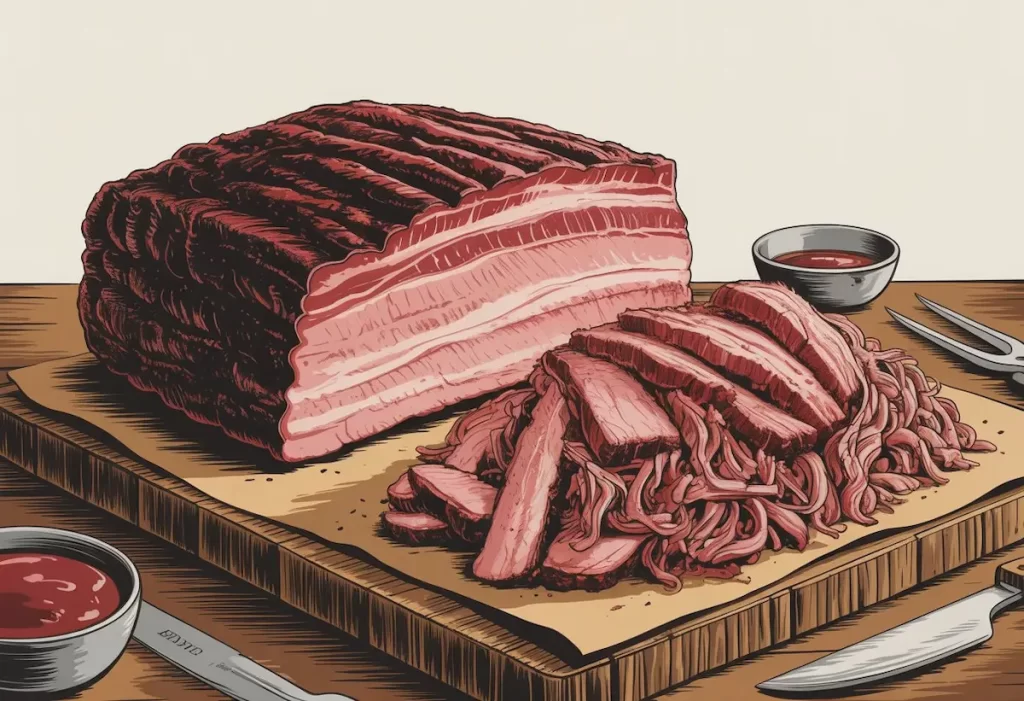
The choice between whole and sliced matters more than most pitmasters admit. Brisket demands respect through proper slicing against the grain, while pulled pork practically falls apart with minimal effort.
Brisket arrives at the table in thin, deliberate slices that showcase the smoke ring and bark. Each cut reveals the hours spent perfecting temperature and dry rub application. The meat needs structure to maintain its integrity on the plate.
Pulled pork takes a different path entirely. The shoulder gets shredded into tender strands that mix the bark with the interior meat. This creates a uniform texture throughout each serving.
Format considerations:
| Meat | Best Format | Why It Works |
|---|---|---|
| Brisket | Sliced | Preserves texture, shows off smoke ring |
| Pulled Pork | Shredded | Distributes seasoning, easier to eat |
Smart caterers consider the event type before choosing. Sliced brisket suits plated dinners where presentation counts. Pulled pork shines at casual gatherings where guests build their own sandwiches.
The dry rub penetrates pulled pork more evenly once shredded. Brisket keeps its seasoning primarily on the exterior bark, which means each slice carries that concentrated flavor punch.
Temperature plays a role too. Brisket holds its shape better when sliced at proper doneness. Pulled pork becomes more manageable as it breaks down during the long cook.
Neither format wins universally. The right choice depends on service style, guest preferences, and how the meat will be eaten.
Low-and-Slow in the Oven: The Classic Pitmaster Method
The pitmaster’s mantra—low and slow—translates beautifully to a home oven. This technique works wonders for both beef brisket and pulled pork, though each demands slightly different attention.
Set the oven between 225°F and 250°F. At this temperature range, connective tissues break down gradually while the meat stays moist. Patience becomes the secret ingredient here.
Brisket requires more finesse than pork shoulder. The flat and point muscles cook at different rates, making internal temperature the only reliable guide. Target 203°F in the thickest part for proper tenderness. This journey typically takes 1 to 1.5 hours per pound.
Pork shoulder proves more forgiving. Its higher fat content and uniform muscle structure mean it can handle slight temperature variations without turning dry. Pull it from the oven when it reaches 195°F to 205°F internally.
The technique mimics what happens in an offset smoker, minus the smoke rings and outdoor romance. Wrapping the meat in foil or butcher paper after the first few hours—a trick called the Texas crutch—speeds things along while keeping moisture locked in.
Professional caterers know this method delivers consistent results. The controlled environment eliminates weather variables and maintains steady heat. While purists might scoff at oven-braised barbecue, the tender, juicy results speak for themselves.
A reliable meat thermometer becomes essential equipment. Guessing leads to disappointment. Low and slow cooking rewards precision, not intuition.
Sous Vide: The Secret Weapon for Perfect Texture
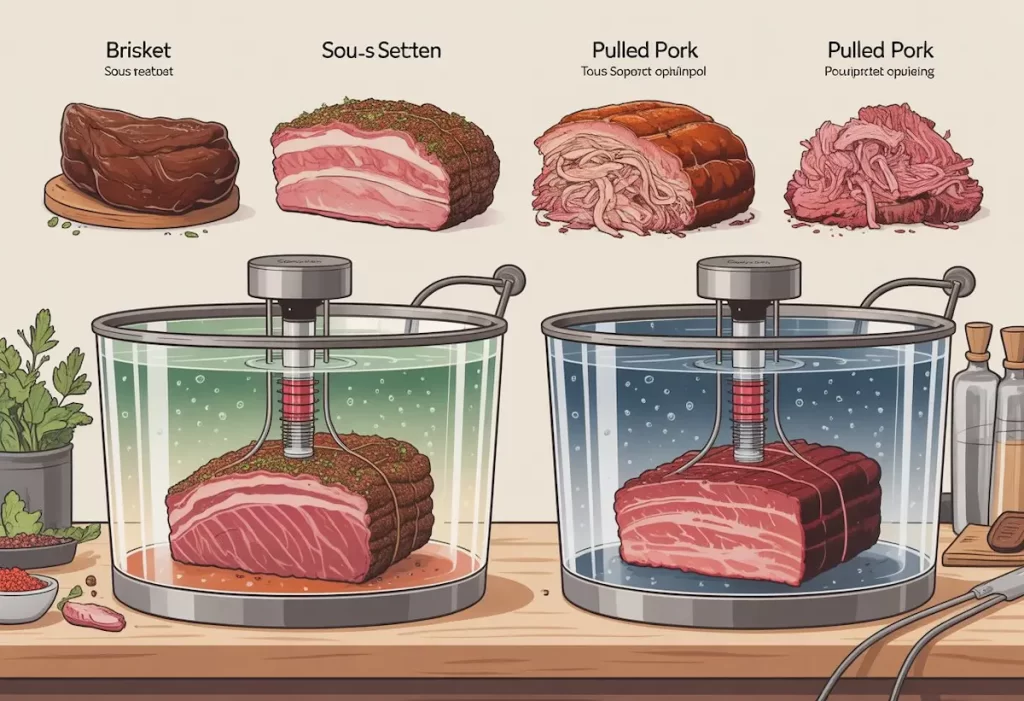
Sous vide cooking transforms both brisket and pulled pork into something remarkable. The method involves sealing meat in a bag and cooking it in water at a precise temperature for hours.
Why Sous Vide Works
Traditional smoking requires constant attention and experience. Sous vide removes the guesswork entirely. The water bath keeps the meat at exactly the right temperature, which means it can’t overcook or dry out.
For brisket, setting the temperature between 155°F and 165°F for 24 to 36 hours breaks down tough collagen without turning the meat mushy. Pork shoulder needs 165°F to 175°F for 12 to 24 hours to achieve that tender pulled pork texture everyone craves.
The Best of Both Worlds
Many pitmasters now combine sous vide with traditional smoking. First, they smoke the meat for 2 to 3 hours to build a proper bark and absorb wood flavor. Then the meat goes into the sous vide bath to finish cooking.
This hybrid approach delivers consistent results every time. The smoke ring forms during the initial smoking phase. The long sous vide cook makes the meat incredibly tender.
| Method | Temperature | Time | Result |
|---|---|---|---|
| Brisket sous vide | 155-165°F | 24-36 hours | Fork-tender, juicy |
| Pulled pork sous vide | 165-175°F | 12-24 hours | Falls apart easily |
After the sous vide bath, a quick sear or blast in a hot oven crisps up the exterior. The inside stays perfectly moist while the outside develops that essential texture contrast.
Skillet Finish: Bringing Back the Bark
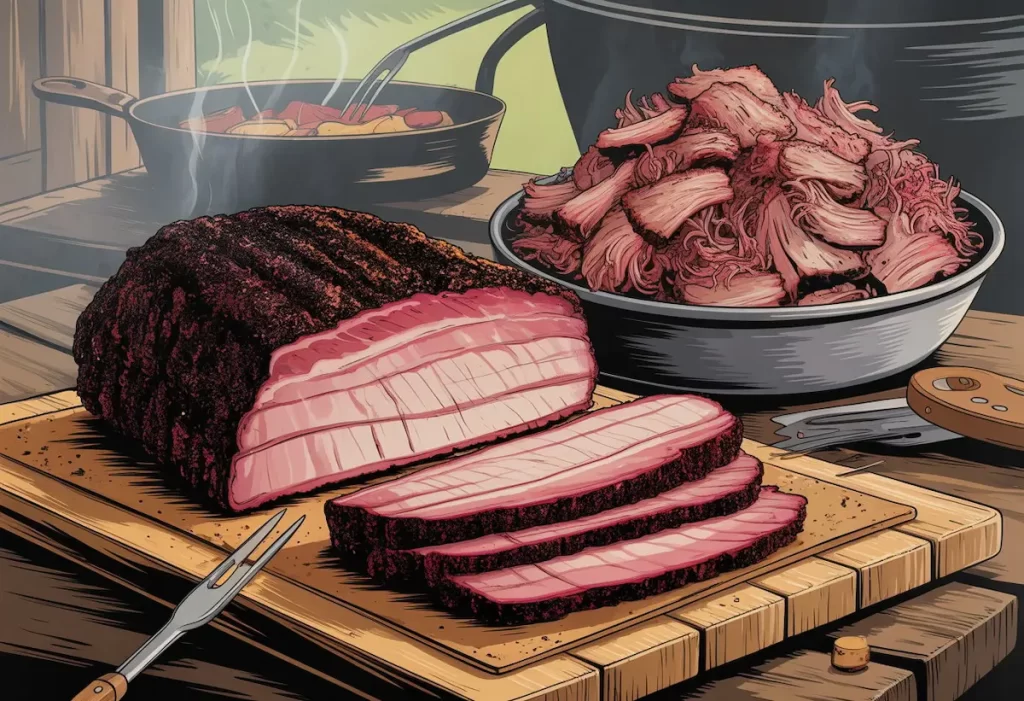
Sometimes smoked meat loses its crispy exterior during resting or reheating. A hot cast-iron skillet fixes this problem fast.
Heat the skillet over medium-high until it starts smoking slightly. No oil needed—the rendered fat from the meat does the work.
For brisket, slice against the grain first, then lay pieces flat in the hot pan for 30-45 seconds per side. The sugars and spices caramelize quickly, creating a fresh crust that rivals what came off the smoker.
Pulled pork benefits from this technique differently. Spread shredded meat in an even layer and leave it alone for 2-3 minutes. The bottom forms a golden, crispy layer while the top stays tender.
Burnt ends particularly shine with a skillet finish. These flavorful cubes develop an almost candy-like coating when hit with high heat. Their fat content protects them from drying out.
Watch the meat closely. The line between perfect bark and actual burning is thin—about 15 seconds in most cases.
| Meat Type | Time per Side | Best Results |
|---|---|---|
| Brisket slices | 30-45 seconds | Caramelized edges |
| Pulled pork | 2-3 minutes | Crispy bottom layer |
| Burnt ends | 45-60 seconds | Candy-like crust |
This method works equally well for both proteins. The key is high heat and minimal movement. Let the Maillard reaction happen without interference.
Clean the skillet between batches to prevent accumulated bits from burning and creating bitter flavors.
Don’t Do This: Microwave Myths and Missteps
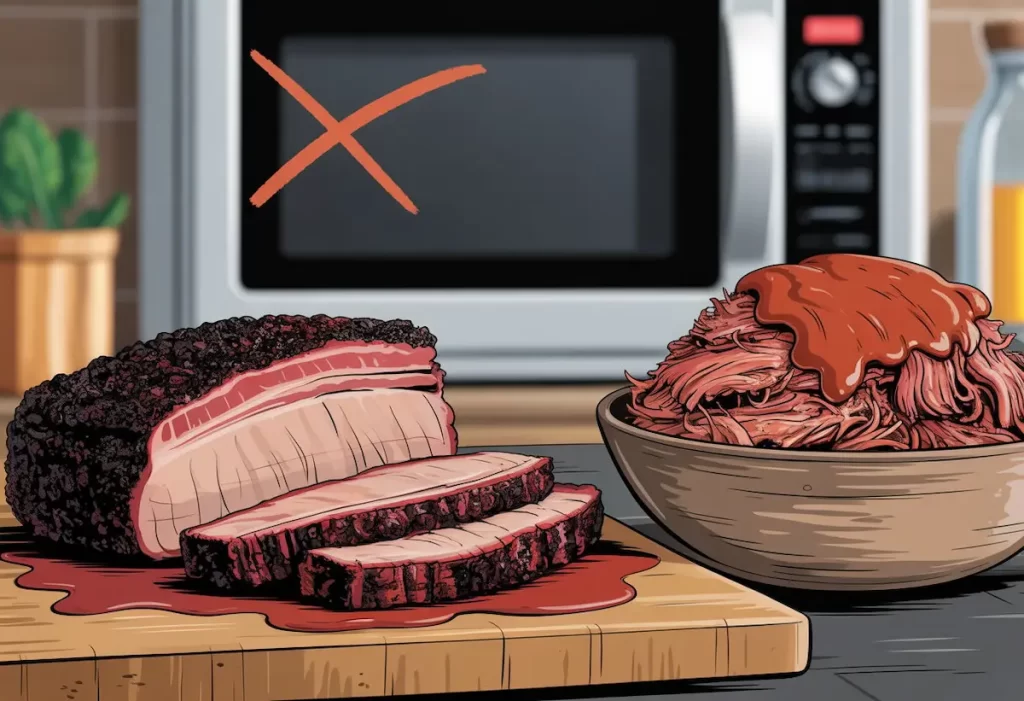
Some folks think reheating brisket or pulled pork in the microwave is harmless. It’s not.
The microwave zaps moisture out of smoked meat faster than a Texas summer. What took 14 hours to smoke becomes rubber in 90 seconds. The fat doesn’t render—it separates and pools at the bottom of the container.
Common microwave mistakes include:
- Running it on high heat (this guarantees leather-textured meat)
- Skipping the moisture step (no water, broth, or sauce means dry disaster)
- Using uncovered containers (steam needs somewhere to go besides straight out)
- Nuking straight from the fridge (cold centers and hot edges aren’t a feature)
The bark that pitmasters spend hours developing? The microwave turns it soggy. Those crispy, flavorful edges become chewy and sad. Pulled pork loses its tender pull and becomes stringy. Brisket transforms from buttery slices into something closer to beef jerky’s disappointing cousin.
Professional caterers don’t use microwaves for a reason. The gentle, low heat required to properly reheat smoked meat can’t happen in a machine designed for speed. An oven at 225°F with proper wrapping brings back that just-smoked quality.
If the microwave is the only option, at least add liquid, cover the meat, use 50% power, and heat in short intervals. But know this: it’s damage control, not proper reheating.
Moisture Boosters: What to Add (And What to Avoid)
Keeping brisket and pulled pork moist during cooking requires strategic interventions. The right additions make the difference between tender meat and dried-out disappointment.
Smart Additions:
- Apple juice or cider – Spritz every 45-60 minutes during cooking
- Beef broth – Works exceptionally well for brisket
- Apple cider vinegar – Cuts through fat while adding moisture
- Butter – A final hour addition creates a rich bark
- Butcher paper wrap – Traps steam while allowing smoke penetration
Wrapping in butcher paper after the stall hits preserves moisture without softening the bark too much. This technique outperforms foil for maintaining texture.
Some pitmasters swear by injecting meat beforehand. Beef broth injections work for brisket, while apple juice suits pork shoulder. The key is moderation—too much liquid creates mushiness.
What to Avoid:
Water lacks flavor and dilutes the meat’s natural taste. Skip it. Sweet BBQ sauce applied too early burns and turns bitter. Save it for serving.
Heavy oils don’t penetrate meat effectively and create greasy surfaces. They’re unnecessary when fat renders naturally during long cooking times.
The worst mistake? Opening the smoker constantly to check progress. Each peek drops temperature and releases precious moisture. Trust the process and resist the urge to fiddle.
Temperature control matters more than any addition. Maintaining steady heat between 225-250°F allows fat to render slowly, creating natural moisture from within the meat itself.
Freezer to Fork: Reheating Frozen Brisket Like a Pro
Frozen brisket doesn’t have to taste like yesterday’s news. The key is treating it with the same respect it received during the original cook.
The Slow Thaw Method (Preferred)
Move the brisket from freezer to refrigerator 24-48 hours before serving. This gradual thaw preserves moisture and texture better than any rush job.
Reheating Options
| Method | Temperature | Time | Best For |
|---|---|---|---|
| Oven | 225°F | 1-2 hours | Whole briskets |
| Sous Vide | 165°F | 45-60 minutes | Sliced portions |
| Stovetop | Low heat | 20-30 minutes | Quick prep |
Wrap the brisket tightly in foil with a splash of beef broth or au jus before reheating. This creates a steam pocket that rehydrates the meat while preventing it from drying out.
Temperature Targets
The internal temperature should reach 165°F for food safety. Use a meat thermometer to check the thickest part.
Sliced brisket reheats faster than whole pieces. If working with slices, layer them in a pan with liquid between each layer for even heating.
Never use a microwave unless absolutely desperate. It turns tender brisket into rubber faster than a pitmaster can spot an imposter at a cookoff. The oven or sous vide method delivers results that rival fresh-smoked meat.
Let the brisket rest for 10 minutes after reheating. This allows the redistributed juices to settle back into the meat fibers.
Party-Ready Reheat: Serving Brisket to a Crowd
Feeding a crowd requires strategy, not just smoke rings and rubs. Brisket stands apart from pulled pork on buns because it demands careful reheating to maintain its tender bite and rich bark.
The secret lies in low heat and moisture. Wrap sliced brisket tightly in foil with a splash of beef broth or au jus, then warm it in a 250°F oven for about 45 minutes. This method preserves the meat’s texture without drying it out.
Timing Your Service
| Task | Time Before Service |
|---|---|
| Remove from fridge | 30 minutes |
| Preheat oven | 15 minutes |
| Reheat wrapped brisket | 45 minutes |
| Rest before slicing | 10 minutes |
For larger gatherings, consider keeping the brisket whole during reheating. Slice against the grain just before guests arrive. This approach locks in juices better than reheating pre-sliced portions.
A chafer or warming tray keeps brisket at safe temperatures without continued cooking. Set it to the lowest setting and add a small pan of water underneath to maintain humidity.
Smart Serving Tips
- Keep slices thick (about pencil-width) to prevent drying
- Offer sauce on the side rather than pre-dressed
- Label the flat and point cuts separately for guest preference
- Plan for 1/3 pound per person as a main course
Unlike pulled pork on a bun, which forgives temperature fluctuations, brisket shows every misstep. Professional caterers know that proper reheating separates memorable meals from mediocre ones. The investment in patience pays dividends when guests taste meat that rivals fresh-off-the-smoker quality.
Bonus Tips from the BBQ Underground
Professional pitmasters guard their secrets like treasure maps. But a few tricks deserve sharing.
For Perfect Shredded Pork:
- Let the meat rest for 30 minutes before pulling. The juices redistribute, preventing dry spots.
- Use two forks or wear insulated gloves. Hands give better control than tools.
- Pull against the grain. This creates shorter fibers that melt on the tongue.
Brisket demands a different approach. The flat and point have separate personalities. Slice the flat thin for presentations. Chop the point for burnt ends or sandwiches.
Temperature isn’t everything. The probe test reveals more than numbers ever could. Insert a thermometer probe into the thickest part. It should slide through like warm butter. Resistance means more time on the smoker.
Wood selection matters more than most realize:
| Meat | Best Wood | Why It Works |
|---|---|---|
| Pulled Pork | Apple, Cherry | Sweet smoke complements pork’s natural richness |
| Brisket | Oak, Hickory | Bold flavors stand up to beef’s intensity |
Save the drippings from both meats. That liquid gold transforms beans, rice, or even breakfast potatoes into something memorable.
The bark on both meats contains concentrated flavor. Don’t discard it during pulling or slicing. Mix it throughout for textural contrast and smoky punch.
Wrap meat in butcher paper instead of foil during the stall. Paper breathes while foil steams. This preserves that hard-earned crust while pushing through temperature plateaus.
Quick-Glance Method Matrix (Infographic Table)
Both meats demand patience and precision, yet their paths diverge considerably. The table below captures the essential differences between these barbecue titans.
| Factor | Brisket | Pulled Pork |
|---|---|---|
| Cut Source | Beef chest muscle | Pork shoulder (Boston butt) |
| Average Weight | 12-16 lbs | 8-10 lbs |
| Cook Time | 12-18 hours | 8-12 hours |
| Temperature | 225-250°F | 225-250°F |
| Internal Temp | 203-205°F | 195-205°F |
| Wood Choice | Oak, hickory, mesquite | Apple, cherry, hickory |
| Fat Content | Moderate to high | High |
| Texture | Sliced or chopped | Shredded |
| Resting Time | 1-2 hours | 30-60 minutes |
| Difficulty Level | Advanced | Intermediate |
The brisket presents a masterclass in patience. Its dense muscle fibers require extended cooking to achieve that coveted tenderness.
Pulled pork offers a slightly more forgiving experience. The shoulder’s marbling and connective tissue break down more readily, though it still demands respect.
Professional caterers recognize these distinctions when planning menus. Brisket service requires precise timing and expert carving technique. Pulled pork allows greater flexibility in preparation and service windows.
Each method produces distinct flavor profiles. Brisket develops a pronounced bark and robust beef character. Pulled pork absorbs smoke gently while maintaining its sweet, porky essence.
Final Bite: The Brisket Reheat Rulebook
Reheating brisket separates the pros from the amateurs. The meat has already been through its journey, and now it needs careful handling to bring it back to life.
The oven method stands as the gold standard. Wrap the brisket tightly in foil with a splash of beef broth or au jus. Heat at 325°F until the internal temperature reaches 165°F. This takes about 45 minutes for a full brisket.
For smaller portions, the sous vide approach works wonders. Seal the meat in a bag and submerge it in 150°F water for an hour. The result mirrors freshly smoked brisket.
Microwave reheating gets a bad reputation, but it works in a pinch. Place sliced brisket in a covered dish with liquid. Use 50% power in one-minute intervals. Check frequently to avoid rubbery texture.
The stovetop offers speed and control. Slice the brisket thin and warm it in a skillet with reserved juices over medium-low heat. Three minutes per side does the trick.
| Method | Time | Best For |
|---|---|---|
| Oven | 45 min | Whole brisket |
| Sous Vide | 1 hour | Perfect texture |
| Stovetop | 6 min | Sliced portions |
| Microwave | 3-5 min | Quick serving |
Never reheat brisket more than once. The meat loses moisture with each cycle. Store leftovers in airtight containers with some cooking liquid. This prevents the dreaded dry brisket syndrome that haunts lesser barbecue operations.
Slice against the grain only after reheating. Cutting beforehand exposes more surface area to drying out.
Frequently Asked Questions
Brisket requires dry rubs and long smoking sessions at 225-250°F, while pork shoulder benefits from similar temperatures but pulls apart more easily due to higher intramuscular fat content.
What are the differences in preparation techniques between brisket and pulled pork?
Brisket demands precision trimming of the fat cap to about a quarter inch. The meat gets a simple rub of salt and pepper, though some pitmasters add garlic powder or paprika.
Pulled pork uses either pork shoulder or boston butt, which contain more connective tissue. These cuts handle bold rubs with brown sugar, paprika, and various spices. The preparation is more forgiving than brisket.
Brisket must be placed fat-side up or down depending on heat source. Pulled pork goes on the smoker without much fuss about positioning.
How do cooking times vary for brisket compared to pulled pork?
A 12-pound brisket takes 10-14 hours at 225-250°F. The meat reaches perfection at an internal temperature of 203°F.
Pork butt or boston butt weighing 8 pounds cooks in 8-12 hours at the same temperature range. The target internal temperature sits at 195-205°F.
Brisket fights back during the stall phase around 150-170°F, which can last for hours. Pulled pork stalls too, but the connective tissue breaks down more predictably.
Can brisket and pulled pork be used interchangeably in recipes?
These meats serve different purposes on the plate. Brisket slices hold their shape and provide a denser, meatier bite. Pulled pork shreds into tender strands that mix well with sauce.
Sandwiches work with both, but the texture differs completely. Brisket creates a structured sandwich, while pulled pork recipe variations produce a saucy, loose filling.
Tacos and nachos favor pulled pork because the shredded texture distributes evenly. Brisket works better when the meat needs to be the star rather than blend into other ingredients.
What are the distinct flavor profiles of brisket versus pulled pork?
Brisket delivers a robust, beefy taste with a pronounced smoke ring. The meat tastes rich and slightly mineraly, with the fat adding buttery notes. A proper bark provides a peppery crust.
Pork shoulder brings milder, sweeter flavors to the table. The intramuscular fat melts throughout the meat, creating a succulent texture. The taste is less intense than beef, which allows smoke and rub to shine through.
Brisket pairs with sharp, vinegar-based sauces or nothing at all. Pulled pork welcomes sweeter sauces, mustard-based varieties, or Carolina-style vinegar pepper combinations.
What type of wood or smoking materials are recommended for each meat when smoking?
Oak stands as the traditional choice for brisket in Texas-style smoking. Post oak specifically provides a medium smoke flavor that doesn’t overpower the beef. Hickory works but can taste too strong for some palates.
Pork shoulder handles fruit woods beautifully. Apple and cherry woods add subtle sweetness that complements the pork’s natural flavors. Hickory and pecan also work well with pork butt.
Mesquite burns hot and intense, making it tricky for long smoking sessions with either meat. Mix it with milder woods if used at all.
How does the nutritional content compare between brisket and pulled pork?
A 3-ounce serving of trimmed brisket contains approximately 210 calories and 11 grams of fat. The protein content sits around 25 grams. Untrimmed brisket pushes calories to 290 with 21 grams of fat.
Pulled pork from boston butt delivers about 250 calories per 3-ounce serving with 18 grams of fat. Protein measures around 20 grams. The higher intramuscular fat explains the calorie difference.
Brisket offers more iron and zinc per serving. Pork provides more thiamine and selenium. Both meats supply B vitamins, though the exact amounts vary by cut and preparation method.