
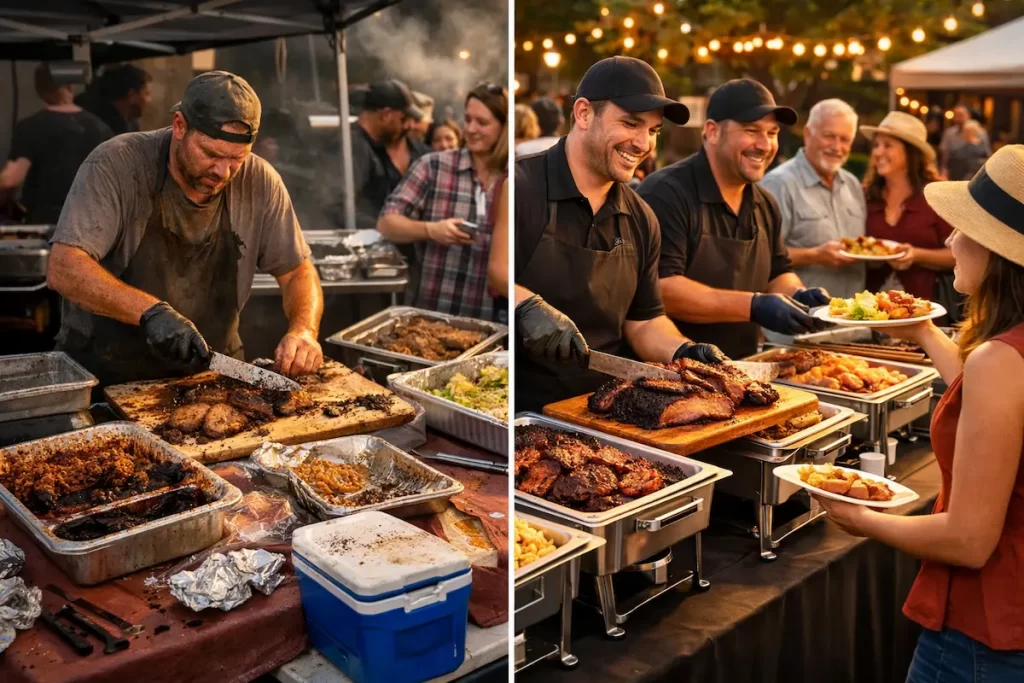
BBQ catering looks simple until the day of the event arrives. Dry brisket, cold sides, and long serving lines can turn a celebration into a disaster. Most BBQ catering fails because teams don’t understand proper reheating methods, which destroys the meat’s texture and flavor.
The difference between mediocre event catering and exceptional service often comes down to technical knowledge. Many caterers rely on bulk warming methods that strip away the bark, dry out the meat, and leave guests disappointed. Professional pitmasters know that reheating smoked meats requires precision and care.
This guide covers the specific techniques that separate amateur operations from high-quality catering services. From oven methods to sous vide precision, these approaches maintain the quality guests expect. The right reheating strategy keeps brisket tender and flavorful, even when serving large groups.
Why Reheating Brisket Can Go Wrong
Brisket is a temperamental cut of meat. It demands respect even after the initial cook.
Most caterers treat reheating as an afterthought. They pop perfectly smoked brisket into a conventional oven and watch twelve hours of careful work turn into shoe leather. The problem lies in how muscle fibers react to secondary heat exposure.
Common reheating mistakes include:
- Cranking the temperature too high (above 325°F)
- Leaving the meat uncovered and exposed to dry air
- Slicing before reheating instead of keeping it whole
- Skipping the liquid barrier that prevents moisture loss
Temperature swings wreak havoc on connective tissue. The collagen that broke down beautifully during the original smoke session can’t withstand aggressive reheating. Proteins contract, squeeze out moisture, and create that dreaded cardboard texture.
Sliced brisket faces even steeper odds. Each piece has more surface area exposed to heat. Without protection, those slices dry out in minutes.
| The Problem | What Happens |
|---|---|
| High heat | Proteins seize up and expel moisture |
| No cover | Surface dries faster than interior warms |
| Pre-slicing | Multiplies exposed edges |
| No liquid | Nothing prevents evaporation |
The timing matters too. Brisket pulled from refrigeration and immediately blasted with heat experiences thermal shock. This rapid change tightens the meat fibers before they have a chance to relax.
Smart caterers know that gentle, slow reheating with proper moisture protection makes the difference between mediocre and exceptional service.
Choosing Whole Versus Sliced Brisket
The decision between whole and sliced brisket shapes the entire catering experience. Each option carries distinct advantages that caterers must weigh against their event’s specific needs.
Whole brisket arrives at the event intact, which creates a memorable presentation moment. Guests watch as the pitmaster carves fresh slices, releasing aromatic smoke into the air. This theatrical element adds value to premium events.
However, whole brisket demands more from the service team. Someone skilled with a knife must be present throughout service. The carving station requires additional space and equipment. Timing becomes critical since meat quality degrades if carved too early.
Sliced brisket offers operational simplicity. The meat arrives pre-portioned and ready to serve. Staff can focus on guest interaction rather than knife work. Service moves faster, which matters for large groups or tight schedules.
The tradeoff comes in moisture retention. Pre-sliced meat loses steam and can dry out during transport. Smart caterers combat this by packing slices tightly and adding a touch of au jus.
| Factor | Whole Brisket | Sliced Brisket |
|---|---|---|
| Presentation | Dramatic, interactive | Clean, efficient |
| Staff Requirements | Skilled carver needed | Minimal training required |
| Service Speed | Slower | Faster |
| Moisture Retention | Superior | Requires careful handling |
| Best For | Upscale events, smaller groups | Large crowds, quick service |
Budget considerations matter too. Whole brisket service typically costs more due to labor requirements. Yet the visual impact often justifies the expense for discerning clients who appreciate craft over convenience.
Oven Technique for Moist, Even Heating
Most caterers overlook the simple truth that ovens dry out meat faster than a campfire joke kills conversation. The key lies in controlling moisture and temperature distribution.
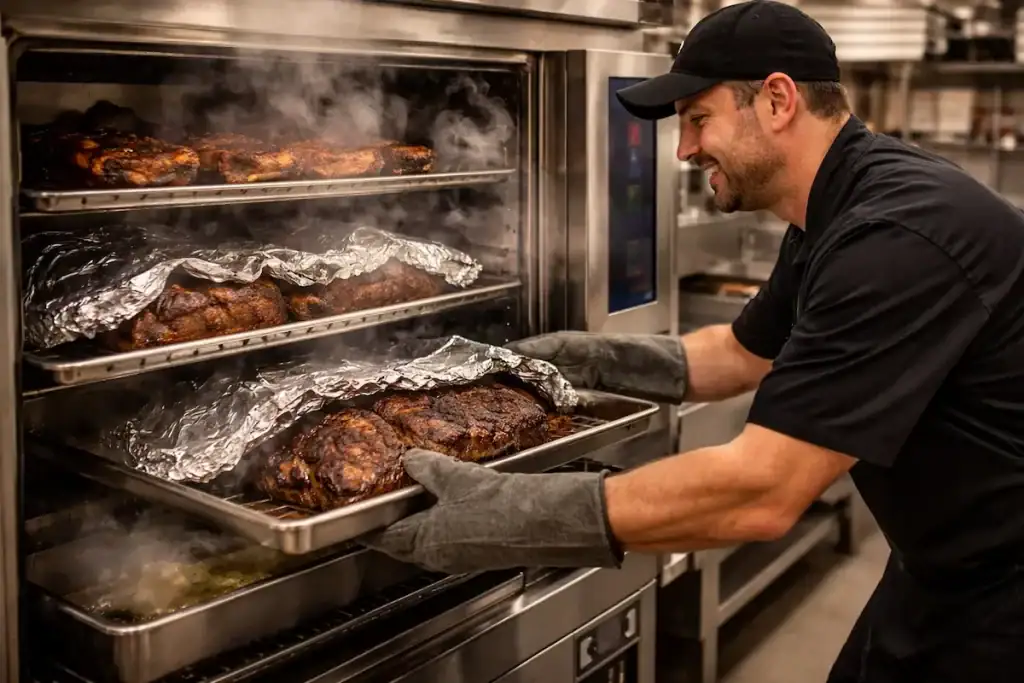
The Water Pan Method transforms any standard oven into a humidity-controlled chamber. Place a deep roasting pan filled with water on the bottom rack. The steam creates a barrier that prevents surface moisture from escaping too quickly.
For even heating, rotation matters more than most professionals admit. Meat placed near the back cooks faster due to heat source proximity. A quarter turn every 45 minutes ensures consistent results across the entire cut.
Critical Temperature Zones:
| Oven Position | Heat Level | Best For |
|---|---|---|
| Top rack | Highest | Finishing, crisping |
| Middle rack | Moderate | Large cuts, brisket |
| Bottom rack | Lowest | Slow cooking, ribs |
The tent technique prevents the dreaded dry exterior. Loosely cover meat with aluminum foil for the first two-thirds of cooking time. Remove it during the final phase to develop bark without sacrificing interior moisture.
Air circulation prevents hot spots that create uneven cooking. Leave at least two inches between the meat and oven walls. Never crowd multiple pieces together.
A reliable oven thermometer costs less than ruining a single brisket. Built-in gauges lie with surprising frequency. Position the thermometer at meat level, not where the manufacturer decided convenience trumped accuracy.
These techniques separate amateur operations from professional catering services that deliver consistent quality regardless of venue limitations.
Precision with Sous Vide for Tender Results
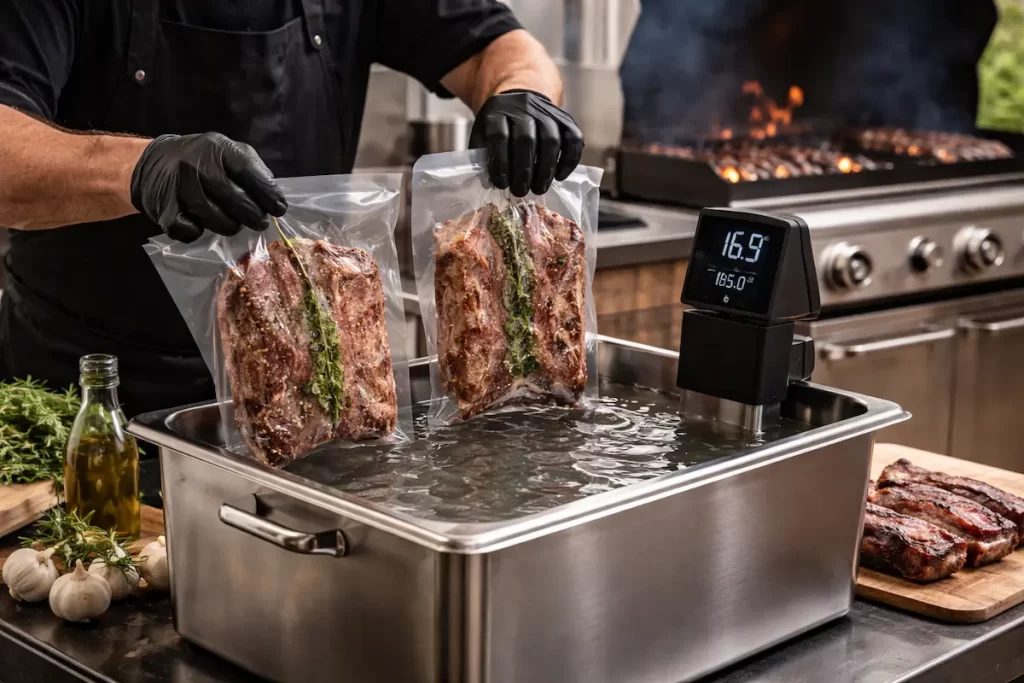
Sous vide transforms tough cuts into fork-tender masterpieces through precise temperature control. The method involves sealing meat in vacuum bags and cooking it in water baths held at exact temperatures for extended periods.
Why BBQ caterers struggle without it:
- Brisket shrinks unevenly over open flames
- Ribs turn out dry when timing goes wrong
- Pork shoulder develops inconsistent texture zones
The water bath maintains 165°F for hours without burning or drying. This gentle approach breaks down collagen while keeping moisture locked inside. Traditional smoking alone can’t match this level of precision.
Smart caterers finish sous vide meat with a quick smoke or char. The initial cook happens days before the event, reducing kitchen chaos. Meat reaches the perfect internal temperature every single time.
| Traditional Method | Sous Vide Method |
|---|---|
| 30% moisture loss | 5% moisture loss |
| 2-hour cook window | 12-hour flexibility |
| Frequent monitoring | Set and forget |
The technique works exceptionally well for:
- Beef brisket (48 hours at 155°F)
- Pork ribs (12 hours at 165°F)
- Turkey breast (4 hours at 150°F)
The equipment pays for itself after preventing one ruined batch. Caterers who ignore this technology keep serving dried-out meat while blaming their smokers. The water bath eliminates guesswork and creates consistent quality that builds reputation.
Professional kitchens rely on this method because consistency matters more than ego. Guests notice tender meat that pulls apart cleanly. They remember caterers who deliver perfect results at every event.
Using a Skillet for Bark Perfection
Most caterers transport perfectly smoked meat only to serve it with disappointing, soggy bark. The moisture from holding containers destroys what took hours to develop.
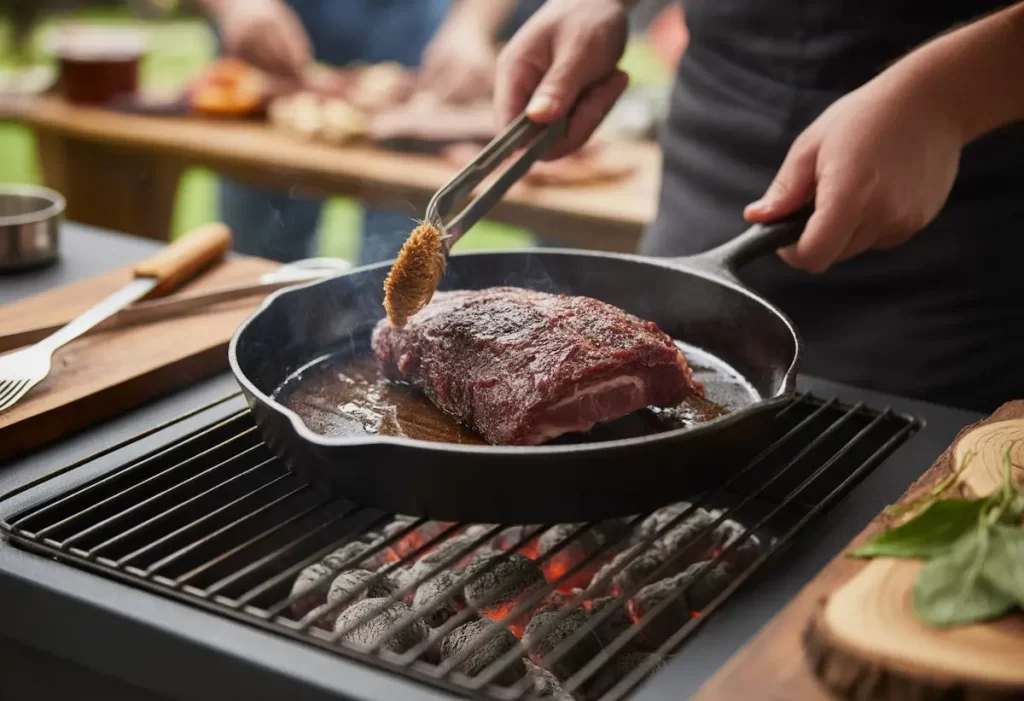
A cast-iron skillet solves this problem brilliantly. Heat it over high flame until it starts smoking slightly. Place the meat bark-side down for 60-90 seconds.
The technique requires attention to three critical factors:
- Temperature control – The skillet needs serious heat, but not so much that it burns the sugar content in the rub
- Timing precision – Too long chars the exterior; too short accomplishes nothing
- Surface contact – Press gently with tongs to maximize bark-to-metal contact
This method recrystalizes the sugars and renders any moisture that developed during transport. The result is an audible crunch when guests bite into their brisket or ribs.
Professional caterers know this trick transforms acceptable meat into memorable experiences. It takes mere minutes before service begins.
The skillet approach works particularly well for:
| Protein | Heat Level | Time Range |
|---|---|---|
| Brisket | High | 75-90 seconds |
| Pork ribs | Medium-high | 60-75 seconds |
| Pulled pork | High | 45-60 seconds |
| Chicken | Medium | 30-45 seconds |
Never skip this step when bark quality matters. The difference between room-temperature bark and skillet-refreshed bark determines whether clients hire you again or move on to your competition.
One warning: don’t attempt this with non-stick pans. Cast iron distributes heat evenly and withstands the necessary temperatures.
Common Microwave Pitfalls
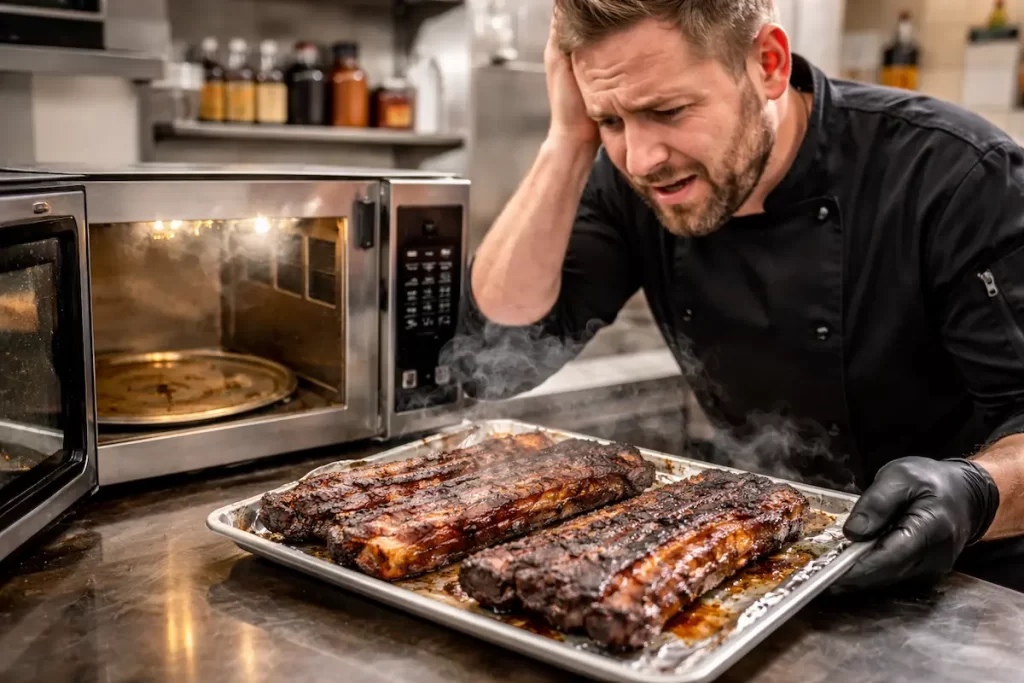
Many caterers resort to microwaves for reheating BBQ at events. This single decision destroys what took hours to perfect.
Microwaves heat unevenly, creating hot spots that dry out brisket edges while leaving the center lukewarm. Guests notice immediately. The carefully maintained bark turns soggy as moisture redistributes incorrectly during rapid heating.
Critical problems with microwave reheating:
- Texture degradation – Pulled pork becomes rubbery and stringy
- Moisture loss – Ribs develop a leathery exterior within minutes
- Temperature inconsistency – Food safety becomes a genuine concern
- Bark destruction – The prized crust turns to mush
Professional caterers understand that proper holding equipment costs money upfront but saves reputations long-term. Alto-Shaam units and cambro carriers maintain temperature without compromising quality.
The microwave temptation grows strongest when timing goes wrong. Traffic delays happen. Setup takes longer than planned. Rather than rushing to serve cold food, inexperienced caterers nuke everything in sight.
Smart operators build buffer time into their schedules. They invest in insulated transport containers that hold safe temperatures for hours. When BBQ arrives at serving temperature and stays there naturally, microwaves never enter the equation.
Some caterers microwave sauces separately, then pour them over properly held meat. This masks some sins but doesn’t fix the fundamental textural damage already done. Guests eating competition-quality BBQ expect excellence in every bite, not cleverly disguised shortcuts.
Moisture-Enhancing Additions
Dry brisket transforms guests into critics faster than burnt ends disappear at a family reunion. Smart caterers know that liquid reinforcements make the difference between memorable meals and mediocre mistakes.
Injection marinades work wonders before the meat hits the smoker. A basic blend of apple juice, butter, and beef stock penetrates deep into the muscle fibers. This internal basting creates insurance against the long cooking process ahead.
Spritzing during the smoke adds another layer of protection. Many pitmasters reach for apple cider vinegar mixed with water every 45 minutes. Others prefer:
- Beer and Worcester sauce combinations
- Pineapple juice with a splash of bourbon
- Simple water with a hint of hot sauce
The key lies in frequency, not volume. Light misting beats heavy dousing every time.
Wrapping techniques seal in precious moisture during the final cooking stages. The Texas crutch method uses aluminum foil to trap steam and accelerate tenderness. Pink butcher paper offers a gentler approach that maintains better bark texture while still protecting against moisture loss.
Resting liquid matters more than most caterers realize. Placing finished meats in a cooler with beef broth or au jus creates a steam bath that rehydrates the exterior. This final step rescues even slightly overcooked proteins.
Professional operations track their moisture retention methods with the same dedication they give to seasoning recipes. Each addition serves a specific purpose in the timeline from raw to ready.
Best Practices for Reheating from Frozen
Frozen BBQ can taste nearly as good as fresh if handled properly. The key lies in patience and proper technique.
Thawing First Always Wins
Moving meat from freezer to refrigerator 24-48 hours before service produces the best results. This slow thaw preserves moisture and texture that quick methods destroy.
Room temperature thawing invites bacteria. Cold water thawing works in a pinch but requires constant attention.
Reheating Methods That Work
Different proteins demand different approaches:
- Brisket and pulled pork: Low oven heat at 225°F wrapped in foil with added liquid (broth, apple juice, or water)
- Ribs: Wrapped tightly in foil at 250°F for 45-60 minutes
- Chicken: Covered in shallow pan at 275°F to prevent drying
The smoker offers another option for those with time. Adding a handful of wood chips brings back that fresh-off-the-pit character.
Critical Temperature Guidelines
Internal temperature matters more than timing. Every piece must reach 165°F minimum for food safety. A reliable meat thermometer eliminates guesswork.
Resting meat for 10-15 minutes after reheating allows juices to redistribute. Cutting too soon dumps moisture onto the cutting board instead of keeping it where it belongs.
Sauce Strategy
Apply sauce during the final 10 minutes of reheating. Earlier application leads to burning and bitter flavors. Some caterers prefer serving sauce on the side entirely, letting guests control their own experience.
Efficient Methods for Serving a Crowd
The buffet line stretches longer than a Texas highway at sunset. Guests grow restless. The brisket grows cold.
Most caterers fail because they treat serving like an afterthought. Smart planning starts with accurate portion sizes—half a pound of meat per person works for most gatherings, though hungry crowds may need more.
Family-style service creates warmth that buffets can’t match. Large platters circulate at each table, letting guests serve themselves while staying seated. This method reduces wait times and keeps food at proper temperatures longer.
Multiple serving stations transform chaos into efficiency:
- Meat carving station
- Sides and fixings station
- Beverage station
- Dessert station
Spread these throughout the venue instead of creating one bottleneck.
Estimating food quantities requires precision, not guesswork. A professional catering setup accounts for every mouth:
| Guest Count | Pulled Pork | Brisket | Ribs | Sides (per type) |
|---|---|---|---|---|
| 50 | 25 lbs | 20 lbs | 100 bones | 1 gallon |
| 100 | 50 lbs | 40 lbs | 200 bones | 2 gallons |
| 200 | 100 lbs | 80 lbs | 400 bones | 4 gallons |
The setup matters as much as the food. Arrange serving stations in a logical flow—proteins first, then sides, then condiments. Keep utensils at each station rather than at the end where forgotten tongs cause delays.
Pre-portioned plates work brilliantly for formal events. Guests receive plated meals simultaneously, eliminating lines entirely. This approach demands more staff but delivers restaurant-quality presentation.
Temperature control wins or loses the battle. Hot food stays hot in chafing dishes. Cold items need ice beds.
Insider Tips from Experienced Pitmasters
Professional pitmasters know that success lives in the details most people overlook. Temperature control matters more than fancy equipment. A $200 thermometer beats a $2,000 smoker every time if the pitmaster doesn’t know how to maintain consistent heat.
Critical timing windows separate good BBQ from mediocre results:
- Brisket needs 60-90 minutes of rest time after smoking
- Pulled pork reaches peak tenderness at 203°F internal temperature
- Ribs require membrane removal before seasoning
Seasoned professionals never skip the water pan in their smokers. This simple trick keeps meat moist and helps regulate temperature swings. Many failed catering events trace back to dried-out proteins that lost moisture during transport.
The best pitmasters prepare backup plans for every scenario. They smoke extra meat, pack redundant heating equipment, and arrive two hours early. Weather changes. Traffic happens. Equipment fails.
Wood selection deserves more attention than it typically receives. Hickory overpowers chicken and fish. Fruit woods like apple and cherry complement lighter meats perfectly. Oak provides reliable, neutral smoke for any protein.
Experienced caterers know that holding temperatures matter as much as cooking temperatures. Hot boxes should maintain 140°F minimum to keep food safe and delicious. Anything lower risks both quality and health department violations.
The final insider secret? Taste everything before service. Every batch of meat cooks differently based on size, fat content, and weather conditions. Adjustments happen in real-time, not according to rigid formulas.
Quick Reference Method Comparison
Different BBQ catering approaches yield vastly different results. The table below breaks down three common methods and their real-world performance.
| Method | Equipment Needed | Quality Result | Staff Required | Best For |
|---|---|---|---|---|
| On-Site Smoking | Full smoker, fuel, backup heat | Exceptional | 3-4 skilled pitmasters | Events over 100 guests |
| Hot Hold Transport | Insulated cambros, heat packs | Good to Very Good | 1-2 experienced staff | Most standard events |
| Pre-Portioned Reheat | Chafers, sterno, basic setup | Fair to Good | 1 general caterer | Budget-conscious gatherings |
On-site smoking delivers restaurant-quality bark and smoke rings. It requires significant space and preparation time. The aromatics alone create an unforgettable experience.
Hot hold transport strikes the balance most professionals prefer. Meat finishes cooking hours before service, rests properly, then travels in temperature-controlled containers. This method preserves moisture and texture remarkably well.
Pre-portioned reheating suits certain scenarios but sacrifices authenticity. The meat loses that prized smoke flavor complexity. Edges dry out despite careful monitoring.
Key factors beyond method selection:
- Resting time affects tenderness more than most realize
- Transport duration directly impacts final quality
- Backup equipment prevents complete disasters
- Weather contingencies separate amateurs from professionals
The right choice depends on guest count, venue restrictions, and quality expectations. Mixing methods for different proteins sometimes works. Brisket travels better than pulled pork. Ribs need gentle handling regardless of approach.
Summary of Essential Guidelines
Successful BBQ catering demands attention to specific details that separate mediocre events from memorable ones. The fundamentals aren’t complicated, but they require discipline.
Temperature control stands as the foundation of quality service. Proteins must remain above 140°F during transport and service. Equipment failures account for most food safety violations at catered events.
Timing separates professionals from amateurs. Brisket needs 12-16 hours of cooking time, not including rest periods. Ribs require 5-6 hours. Rushing either one produces tough, disappointing results that no sauce can salvage.
The essential checklist includes:
- Proper equipment: Commercial smokers, insulated cambros, and backup heat sources
- Accurate portioning: 1/3 pound pulled pork per person, 1/2 pound for brisket enthusiasts
- Quality ingredients: USDA Choice or higher for beef, heritage breeds for pork when possible
- Contingency plans: Extra fuel, backup proteins, emergency contact list
Staff training cannot be overlooked. Every team member should know proper handling procedures and how to identify when meat has been compromised. One undertrained server can undo hours of careful preparation.
Communication with clients prevents most disasters. Written agreements should specify menu items, guest counts, service times, and venue details. Assumptions lead to angry customers and negative reviews.
The difference between failure and success often comes down to preparation. Great BBQ caterers don’t wing it. They follow systems, maintain standards, and treat every event like their reputation depends on it—because it does.
Frequently Asked Questions
BBQ catering failures stem from predictable problems with food safety, logistics, and vendor preparation. The following questions address the specific breakdowns that separate reliable service from disaster.
What are the most common reasons BBQ catering goes wrong at events?
Poor menu planning creates the majority of catering disasters. Caterers who fail to account for dietary restrictions leave guests hungry and hosts embarrassed. A rigid menu that doesn’t accommodate vegetarians, gluten-free guests, or those with allergies signals amateur operation.
Underestimating setup requirements at venues ranks as another frequent mistake. Many caterers arrive without confirming venue rules or available kitchen facilities. They discover too late that open flames aren’t permitted or that electrical capacity can’t support their equipment.
Communication breakdowns between caterer and client cause preventable problems. When service fees, gratuities, and menu details aren’t spelled out clearly, expectations clash with reality. Wedding catering amplifies these issues because the stakes run higher and timelines leave no room for error.
How can you tell whether a BBQ caterer can handle off-site cooking and service reliably?
A professional caterer offers menu tasting before the event. This session reveals their food quality and gives clients a chance to evaluate their organizational skills. Caterers who skip this step often lack confidence in their product or process.
Request to see their contingency plans for equipment failure and weather emergencies. Experienced operators carry backup smokers, generators, and shelter systems. They’ve learned that Murphy’s Law governs outdoor cooking events.
Ask about their licensing, insurance, and health department certifications. A legitimate operation maintains current permits and doesn’t hesitate to provide documentation. Their willingness to discuss food safety protocols demonstrates professionalism.
What food safety and temperature-control mistakes cause the biggest problems in BBQ catering?
The danger zone between 40°F and 140°F breeds bacteria at alarming rates. Meat left at room temperature during transport or setup can sicken dozens of guests. Professional caterers use insulated cambros and hot boxes to maintain safe temperatures from kitchen to serving line.
Cross-contamination happens when raw meat contacts ready-to-eat items. Cutting boards, utensils, and hands must be sanitized between tasks. Many common catering mistakes involve using the same tongs for raw and cooked proteins.
Insufficient holding equipment forces caterers to serve food that’s dropped below safe temperatures. Chafing dishes without proper heat sources become bacteria incubators. Quality operations invest in commercial-grade warmers that maintain 165°F or above for hot-held items.
How do portion planning and timing errors lead to running out of food or long serving lines?
Miscalculating portions leaves guests standing in line staring at empty pans. The standard half-pound of meat per person assumes balanced sides and appetizers. Caterers who ignore guest demographics—like serving dainty portions to a crowd of hungry laborers—create shortages.
Poor timing between cooking and service ruins even generous portions. Brisket that finishes three hours early dries out under heat lamps. Ribs pulled too late force guests to wait while hunger turns to irritation.
Inefficient serving line design creates bottlenecks that feel like food shortages even when plenty exists. A single carving station for 200 guests guarantees complaints. Smart caterers run multiple stations and pre-slice portions during slower periods.
What equipment and site-setup issues most often derail on-location BBQ catering?
Arriving at a venue without adequate electrical power stops service cold. Many caterers assume standard outlets will support warming equipment, beverage stations, and lighting. A 20-amp circuit can’t handle the load, and tripped breakers leave food at unsafe temperatures.
Inadequate workspace at the venue hampers efficiency. Kitchen facilities that looked sufficient during planning become cramped when staff, equipment, and food converge. Caterers need staging areas for assembly, serving zones, and breakdown stations.
Weather exposure ruins outdoor setups without proper protection. Rain soaks buffet lines while wind scatters napkins and chills food. Tents, sidewalls, and strategic positioning prevent these issues, but only when planned in advance.
What are the most common accidents in catering, and how can they be prevented during BBQ service?
Burns from hot equipment and surfaces lead accident lists at BBQ events. Staff rushing to maintain service timelines grab hot handles or lean against smokers. Proper training, heat-resistant gloves, and clearly marked hot zones reduce these injuries.
Slips and falls spike during outdoor catering on uneven ground or wet grass. Grease spills on serving areas create skating rinks. Non-slip mats, immediate cleanup protocols, and appropriate footwear for staff prevent most incidents.
Food-related allergies turn serious when dietary requirements get ignored or mislabeled. A guest with shellfish allergies needs assurance that BBQ rubs and sauces don’t contain hidden allergens. Clear ingredient lists and dedicated utensils for allergen-free items protect vulnerable guests and caterers from liability.