
How to Plan Food for a 100+ Person Event: A Complete Logistics and Budget Guide

How to Plan Food for a 100+ Person Event: A Complete Logistics and Budget Guide

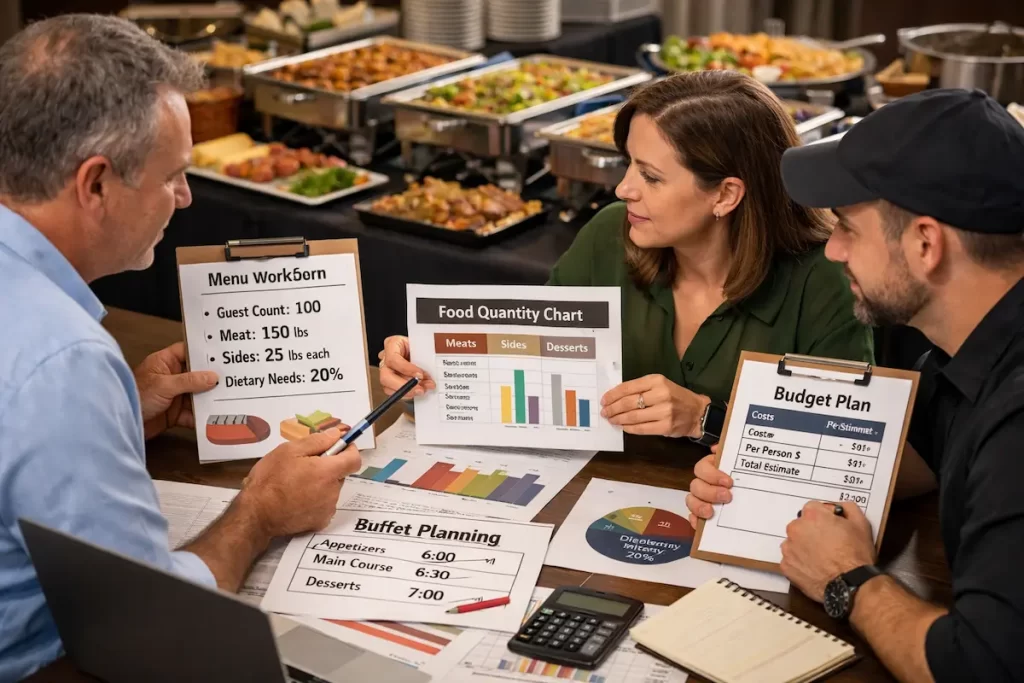
Planning food for over 100 guests requires precision, not guesswork. For a 100-person event, expect to serve roughly 150 pounds of meat, 25 pounds of sides per dish, and account for 20% dietary restrictions. These numbers shift based on event style, time of day, and guest demographics.

Most hosts panic about quantity and forget about quality execution. Running out of food ranks among catering’s deadliest sins, yet drowning guests in mediocre buffet spreads wastes money and effort. The sweet spot lies in strategic planning that considers format, timing, and smart preparation methods.

This guide breaks down the mathematics of crowd feeding while addressing the finer points that separate amateur potlucks from professional service. From selecting the right proteins to managing reheating logistics for large batches, these techniques ensure every guest leaves satisfied. The strategies ahead draw from years of feeding hungry crowds who expect both abundance and excellence.

Common Brisket Reheating Mistakes

Reheating brisket for a large event requires precision. Many caterers rush this step and end up serving dry, disappointing meat to their guests.

The biggest error is cranking up the oven temperature too high. Brisket needs low and slow heat, even when reheating. Anything above 325°F will squeeze out moisture faster than a wrung-out dishrag.

Critical mistakes to avoid:

  • Reheating without liquid or wrapping
  • Using a microwave for the entire portion
  • Slicing the brisket before reheating
  • Leaving the meat uncovered in the oven
  • Reheating straight from frozen without thawing

Slicing before reheating exposes too much surface area. The edges dry out while the center struggles to warm through. Keep the brisket whole or in large sections until it reaches serving temperature.

Another common fumble involves skipping the resting period. Brisket pulled straight from heat and immediately sliced loses its juices on the cutting board. Those precious drippings belong in the meat, not pooled beside it.

Many caterers also ignore carryover cooking. Brisket continues cooking after removal from heat, so pulling it at the exact serving temperature guarantees overcooked meat. Smart professionals remove it about 10°F below target.

The microwave deserves special mention as the destroyer of brisket. It heats unevenly and turns tender meat into something resembling shoe leather. Save the microwave for reheating coffee, not carefully smoked beef.

Proper reheating separates amateur events from professional gatherings. These mistakes are entirely preventable with patience and proper technique.

Format Matters: Whole Versus Sliced Brisket

The presentation format of brisket dramatically affects serving logistics for large events. Whole briskets arrive at the buffet line intact, while pre-sliced options come ready to serve.

Whole briskets create a memorable visual impact. Guests watch as skilled carvers slice each portion to order, ensuring maximum juiciness. This theatrical approach works beautifully for events with dedicated carving stations and experienced staff.

The drawback? Service slows considerably. One carver handles roughly 40-50 guests per hour, meaning a 100-person event requires multiple stations or patient attendees.

Pre-sliced brisket moves the line faster. Much faster. The meat stays warm in chafing dishes, and guests serve themselves without bottlenecks. This format shines at casual gatherings where speed matters more than showmanship.

However, sliced brisket loses moisture quicker than whole cuts. Even with proper holding techniques, the increased surface area means faster drying. Quality suffers after the first hour unless the caterer uses specialized warming equipment.

FormatService SpeedVisual AppealMoisture RetentionStaff Required
WholeSlowerHighExcellentMore
SlicedFasterModerateGoodLess

Smart caterers often split the difference. They’ll slice two-thirds of the brisket beforehand while keeping one whole for carving demonstrations. This hybrid approach balances efficiency with entertainment.

The choice ultimately depends on event style, timeline, and available manpower. Formal sit-down dinners favor whole briskets. Buffet-style receptions with tight schedules benefit from pre-slicing.

Oven Reheating: Low and Slow Method

Oven Reheating: Low and Slow Method

The oven provides reliable control for reheating large quantities of food. Set the temperature between 250°F and 300°F to warm dishes without drying them out.

Cover all pans tightly with aluminum foil before placing them in the oven. This traps moisture and prevents the food from developing a crusty exterior. For proteins like brisket or pulled pork, add a splash of broth or au jus before sealing the foil.

Recommended reheating times at 275°F:

Food ItemTime RequiredInternal Temp
Sliced brisket (full pan)45-60 minutes165°F
Pulled pork (full pan)40-50 minutes165°F
Chicken quarters35-45 minutes165°F
Smoked sausage25-30 minutes140°F
Side dishes (beans, mac & cheese)30-40 minutes165°F

Use a meat thermometer to verify internal temperatures rather than relying on time alone. Different oven hot spots can affect heating consistency.

Stagger the reheating schedule based on serving time. Start with items that hold heat well, like beans and casseroles. Add proteins closer to service time to maintain peak quality.

The caterer should check pans every 15 minutes during the final half hour. This prevents overcooking and allows for adjustments if certain areas heat faster than others. Rotate pans if needed for even warming throughout.

Using Sous Vide for Superior Results

Using Sous Vide for Superior Results

Sous vide transforms large-scale catering from a stressful juggling act into a controlled operation. This French technique involves sealing proteins in bags and cooking them in precise temperature-controlled water baths.

For events serving 100+ guests, consistency matters more than anything else. Guest number 17 deserves the same perfectly cooked brisket as guest number 94. Sous vide delivers this reliability without the constant monitoring traditional methods demand.

Key Benefits for Large Events:

  • Advance Preparation – Cook meats 1-2 days ahead, then finish on the grill for smoke and char
  • Perfect Doneness – Every piece reaches the exact target temperature throughout
  • Reduced Waste – Proteins lose less moisture compared to traditional cooking
  • Labor Efficiency – Staff can focus on sides and service instead of babysitting smokers

The process works brilliantly for pulled pork, brisket, and chicken. Season the meat, seal it, then cook at the target temperature for extended periods. A pork shoulder at 165°F for 18 hours emerges tender and ready for a quick smoke finish.

Smart caterers use this method as their secret weapon. Guests taste the difference without knowing the technique behind it. The meat stays juicy, the texture remains consistent, and panic disappears from the kitchen.

One critical note: sous vide handles the cooking, but smoke flavor still requires actual smoke. Plan to finish proteins on a grill or in a smoker for that authentic BBQ taste guests expect. The water bath does the heavy lifting; the fire adds the soul.

Reviving the Bark With a Skillet Finish

Reviving the Bark With a Skillet Finish

Smoked meats can lose their prized bark during transport to large events. The crusty exterior that took hours to develop becomes soft and sad-looking by serving time.

A quick skillet finish brings that bark back to life. Heat a cast-iron skillet over medium-high heat until it’s properly hot. Place meat portions bark-side down for 60-90 seconds.

The Process:

  • Heat skillet until a water droplet dances across the surface
  • Pat meat dry with paper towels before searing
  • Work in small batches to maintain temperature
  • Flip only once to preserve moisture

The dry heat recreates the Maillard reaction that formed the original bark. This technique works particularly well for brisket slices, pork shoulder chunks, and chicken quarters.

Key Benefits:

AdvantageResult
Quick executionServes 100+ guests efficiently
Temperature controlMeat stays warm without drying
Visual appealBark looks freshly smoked
Texture restorationCrispy exterior returns

This method requires minimal equipment and space at the event venue. Two skillets running simultaneously can refresh enough meat to serve a hundred guests in under thirty minutes.

The bark shouldn’t turn black or develop a burnt flavor. If smoke starts rising from the pan, reduce heat immediately. The goal is restoration, not incineration.

Pro tip: Keep finished portions in warming trays covered loosely with foil. Tight covering steams the bark away again.

Microwave Methods: Pitfalls and Precautions

Microwave Methods: Pitfalls and Precautions

Microwaves belong in office break rooms, not professional catering operations.

For events serving 100+ guests, these appliances create more problems than they solve. The uneven heating turns brisket into rubber on the edges while leaving the center cold. Nobody wants to explain why Aunt Martha’s pulled pork feels like it came from three different kitchens.

Critical Issues with Microwave Reheating:

  • Temperature inconsistency ruins texture and food safety
  • Limited capacity forces batch after batch of reheating
  • Steam buildup makes crispy bark soggy
  • Timing becomes a logistical nightmare

The math alone should discourage this approach. A standard microwave holds maybe four plates at once. That means 25+ cycles for a hundred people, each taking 3-5 minutes. The event ends before the food gets served.

When Microwaves Might Work:

ScenarioWhy It’s Acceptable
Emergency sauce warmingSmall quantities heat quickly
Last-minute butter softeningMinimal impact on quality
Staff meal prepDifferent standards apply

Serious caterers invest in proper warming equipment. Chafing dishes, cambro containers, and insulated transport boxes maintain consistent temperatures without sacrificing quality. These tools cost more upfront but preserve the integrity of smoked meats that took 12+ hours to prepare.

The microwave shortcut telegraphs amateur hour to guests. Professional operations demand professional methods, especially when reputations hang in the balance.

Choosing the Right Moisture Boosters

Dry meat kills the vibe of any large gathering faster than a smoke alarm at midnight. When feeding 100+ guests, moisture boosters become essential insurance against the cardinal sin of BBQ catering.

Apple juice remains the workhorse of the industry. It adds sweetness without overwhelming the meat’s natural flavors. Spray it hourly during cooking for consistent results.

Beef broth works wonders for brisket and roasts. The savory notes complement red meat perfectly while maintaining moisture through extended cook times.

For something more refined, consider these proven combinations:

  • White wine + butter for poultry dishes
  • Pineapple juice for pork shoulders and ribs
  • Beer for a malty depth that pairs with beef
  • Cider vinegar mixed with water for tangy Carolina-style applications

The spray bottle is your best friend. Fill it with your chosen moisture booster and apply every 45-60 minutes after the first two hours of cooking. This creates a barrier against moisture loss while building layers of flavor.

Temperature matters more than most people realize. Room temperature liquids won’t shock the meat’s surface, which maintains consistent cooking. Cold sprays can slow down the process and create uneven results.

Budget about 1-2 cups of moisture booster per 10 pounds of meat. That might seem excessive, but better to have surplus than serve sandpaper. The investment pays dividends when guests return for seconds instead of discreetly wrapping napkins around dried-out portions.

Reheating Frozen Brisket Properly

Frozen brisket transforms from an ice block into tender, juicy meat when reheated correctly. The process requires patience and precision.

Thawing comes first. Move the brisket from freezer to refrigerator 24-48 hours before the event. This slow thaw preserves moisture and texture. Never thaw at room temperature—bacteria multiply faster than guests arrive at a barbecue.

The oven method delivers consistent results for large quantities:

  1. Preheat oven to 325°F
  2. Place brisket in a deep pan with 1 cup of beef broth or original cooking liquid
  3. Cover tightly with aluminum foil
  4. Heat for 1 hour per 5 pounds of meat
  5. Check internal temperature reaches 165°F

Moisture is everything. The foil creates a steam chamber that prevents the meat from drying out. Some caterers add a splash of apple juice for extra flavor.

For events requiring multiple briskets, stagger the reheating times. This keeps meat at optimal serving temperature throughout the event.

MethodTemperatureTime per 5 lbsBest For
Oven325°F60 minutesLarge quantities
Smoker250°F90 minutesAdding fresh smoke flavor
Sous vide165°F45 minutesMaintaining exact texture

Slice after reheating, not before. Whole briskets retain moisture better than pre-cut pieces. The meat stays warmer longer when carved just before service.

A properly reheated brisket tastes remarkably close to fresh-smoked. Guests won’t know the difference when technique meets quality ingredients.

Strategies for Serving to Large Groups

The right serving strategy makes or breaks an event. When catering for 100 people, speed and efficiency matter just as much as the food itself.

Buffet-style service works best for groups this size. Guests move at their own pace, and the kitchen staff can focus on keeping dishes fresh rather than plating individual meals. Set up multiple serving stations to prevent bottlenecks—nobody wants to wait 20 minutes for brisket, no matter how good it smells.

Chafing dishes are the unsung heroes of large events. They keep food at safe temperatures while maintaining quality. Smart caterers use them strategically, rotating smaller batches of food rather than filling them to the brim. This approach keeps dishes looking fresh and helps reduce food waste.

Key serving equipment needed:

  • Chafing dishes with fuel (plan 1 per every 2 dishes)
  • Serving utensils (extras for backup)
  • Plate warmers or cooling trays
  • Clear signage for each dish

Portion control becomes critical at scale. Pre-portioned proteins prevent the first 30 guests from taking half the food. A skilled server can eyeball portions that satisfy guests while ensuring everyone gets fed.

Temperature management separates amateur operations from professional ones. Hot foods stay above 140°F, cold items below 40°F. Check temperatures every 30 minutes. The danger zone between these temperatures invites trouble.

Timing the food rollout prevents waste and maintains quality. Stagger dish refills based on guest flow rather than dumping everything out at once. Fresh food tastes better, looks more appealing, and keeps guests coming back for seconds instead of settling for dried-out edges.

Pro Tips From BBQ Enthusiasts

Seasoned pitmasters swear by the rule of thumb: plan for 3/4 pound of meat per person when serving a crowd over 100. This accounts for hearty appetites and the inevitable seconds.

Temperature control separates amateurs from professionals. Smart caterers use multiple smokers rather than overloading a single unit. This prevents temperature fluctuations that turn brisket into shoe leather.

The overnight rest makes all the difference. Pulled pork benefits from an 8-hour smoke followed by a 2-hour rest wrapped in butcher paper. The connective tissues break down properly, and the meat stays moist without constant monitoring.

Essential timing guidelines:

ProteinCook Time per PoundResting Period
Brisket90 minutes1-2 hours
Pork Shoulder90 minutes2 hours
Ribs (full rack)5-6 hours total15 minutes
Chicken Quarters45 minutes10 minutes

Experienced caterers prep sauces three days ahead. The flavors marry together, and it eliminates day-of scrambling. Keep sauces in squeeze bottles for controlled portions and cleaner presentation.

Side dishes steal the show when done right. Calculate 8 ounces of sides per guest total, split among three options. This prevents waste while ensuring variety.

The secret weapon? A dedicated carving station with sharp knives and multiple cutting boards. Assign one person solely to slicing duties during service. Clean cuts preserve moisture and create attractive plates that guests actually want to photograph.

Quick-Reference Method Matrix

Planning food quantities for large events requires precision. The matrix below simplifies the process by matching calculation methods with specific event types.

MethodBest ForKey Tool
Per-Person FormulaPlated dinners, formal eventsFood quantity calculator
Buffet RatioCasual gatherings, variety needed1.5x standard portions
Protein-FirstBBQ events, meat-focused menus8 oz per guest
Category DivisionMixed menus, dietary restrictions40% protein, 30% sides, 30% extras

Each approach serves different purposes. Plated dinners demand exact counts since each guest receives identical portions. Buffet-style events need extra food because people serve themselves with varying appetites.

The protein-first method works exceptionally well for BBQ catering. Start by calculating main meats, then build sides around that foundation. This prevents overordering less popular items while ensuring the star attractions stay plentiful.

food quantity calculator streamlines the entire process. These tools factor in meal duration, guest demographics, and service style. They eliminate guesswork by providing specific quantities for proteins, starches, vegetables, and beverages.

Professional caterers often combine multiple methods. They might use per-person formulas for proteins while applying buffet ratios to sides. This hybrid approach accounts for real-world eating patterns where guests pile plates with favorites while barely touching other dishes.

The secret lies in knowing your crowd. Corporate lunches differ dramatically from wedding receptions. Adjust calculations based on event timing, average age, and cultural preferences.

Essential Rules for Perfect Brisket Reheating

Brisket loses moisture faster than a politician loses campaign promises. The key is low and slow reheating, just like the original cook.

Temperature and Timing

The oven should stay at 225°F. Wrap the brisket tightly in butcher paper or aluminum foil with a splash of beef broth. Plan for 45 minutes per pound when reheating from refrigerated.

A meat thermometer prevents disasters. The internal temperature needs to reach 165°F for food safety.

Moisture Protection Methods

MethodBest ForTime Required
Oven wrappedLarge quantities2-4 hours
Sous videPrecision results1-2 hours
Steam tableService holdingOngoing

Never use a microwave unless you enjoy serving leather. Steam tables work brilliantly for maintaining temperature during service, but they require proper water levels.

Slicing Strategy

Cold brisket slices cleaner than warm. Cut portions before reheating when feeding 100+ guests. This saves time during service and ensures consistent portions.

Slice against the grain at pencil thickness. The flat and point have different grain directions, which trips up even experienced cooks.

Sauce Application

Apply sauce after reheating, not before. Pre-sauced brisket becomes mushy and loses its bark texture. Keep sauce warm in a separate container for guest service.

The bark deserves respect. Wrapping in foil softens it slightly, but butcher paper maintains better texture. For large events, portion control trumps perfect bark preservation.

Frequently Asked Questions

Planning food quantities, budgets, and logistics for large events requires precise calculations and smart decisions about serving methods and timing.

How much food do I need per person for a 100+ guest event?

Each guest needs roughly 1 to 1.5 pounds of total food when combining all courses. This breaks down to about 6 to 8 ounces of protein per person, 4 to 6 ounces of starch per person, and 3 to 5 ounces of vegetables or sides.

For appetizers per person, planners should count on 5 to 7 pieces if serving a full meal afterward. If appetizers replace dinner, that number jumps to 12 to 15 pieces per guest.

Drinks per person typically means 2 to 3 beverages during a 3 to 4 hour event. Water consumption alone averages 2 glasses per guest, while soft drinks and other beverages add another 1 to 2 servings each.

What are the cheapest menu options to feed 100–150 people without sacrificing quality?

Pulled pork reigns as the most economical protein choice, costing $3 to $5 per person while delivering rich flavor. Chicken quarters follow closely at $4 to $6 per guest and offer versatility in preparation methods.

Rice, beans, coleslaw, and potato salad serve as budget-friendly sides that cost $1 to $2 per person. These classics pair well with most proteins and stretch food budgets without tasting cheap.

Sheet cakes, brownies, and fruit platters keep dessert costs between $2 to $3 per person. Skip individual plated desserts and opt for these crowd-pleasers that guests can serve themselves.

How do I estimate quantities for main dishes, sides, desserts, and drinks for a large crowd?

To calculate food quantities for 100 guests, start with protein per guest at 6 to 8 ounces before cooking. Raw meat loses 25% of its weight during cooking, so purchase 8 to 10 ounces of raw protein per person.

Sides require different math than proteins. Starch per person should measure 4 to 6 ounces, vegetables need 3 to 5 ounces, and salads require 2 to 3 ounces per guest.

Food quantities for 100 people include about 50 to 60 pounds of cooked protein, 25 to 35 pounds of starches, and 20 to 30 pounds of vegetables. These numbers account for different appetites and second servings.

Desserts work out to one slice of cake or two smaller treats per person. Drinks need more generous planning at 3 servings per guest, which means 300 total beverages for 100 people.

What is the most cost-effective serving style for 100+ guests: buffet, plated, or family-style?

Buffet service cuts labor costs dramatically and requires fewer servers than plated meals. One server can manage a buffet line of 30 to 40 guests, while plated service needs one server per 15 to 20 people.

Food waste increases slightly with buffets, but the labor savings offset this concern. Guests take what they want and often eat more, which keeps satisfaction high without breaking budgets.

Family-style falls between buffet and plated in cost and formality. It requires more serving dishes and coordination but creates a warm atmosphere that works well for celebrations.

How far in advance should I shop, prep, cook, and store food safely for a 100+ person event at home?

Shopping should happen 2 to 3 days before the event for fresh produce and 3 to 5 days ahead for proteins. Frozen items can be purchased up to 2 weeks early if freezer space allows.

Prep work splits into stages for safety and efficiency. Vegetable chopping happens 1 to 2 days before, while proteins get seasoned 12 to 24 hours ahead for maximum flavor development.

Large cuts of meat need 10 to 14 hours of cooking time for low and slow methods. Sides can be prepared 1 day ahead and reheated, while cold dishes work best when made the morning of the event.

Food storage requires careful attention to temperature zones. Hot foods must stay above 140°F, cold items below 40°F, and nothing should sit in the danger zone of 40°F to 140°F for more than 2 hours.

What is a realistic total food budget per guest for a 100+ person wedding or party?

Budget expectations range from $15 to $25 per person for casual events with simple menus. This covers basic proteins, two sides, drinks, and dessert without fancy presentations.

Mid-range events cost $25 to $40 per guest and include better cuts of meat, more side options, and upgraded desserts. This tier suits most weddings and milestone celebrations where quality matters.

Premium events push costs to $40 to $60 per person with specialty proteins, elaborate sides, and custom desserts. These numbers apply when hosts want restaurant-quality food for large crowds.

A menu for 100 people at the mid-range level totals $2,500 to $4,000 for all food and beverages. Smart planners build in a 10% buffer for last-minute additions or larger-than-expected appetites.