Picking the wrong catering style can turn your carefully planned event into a logistical nightmare. Guests mill around confused. Food gets cold. The whole experience falls flat.
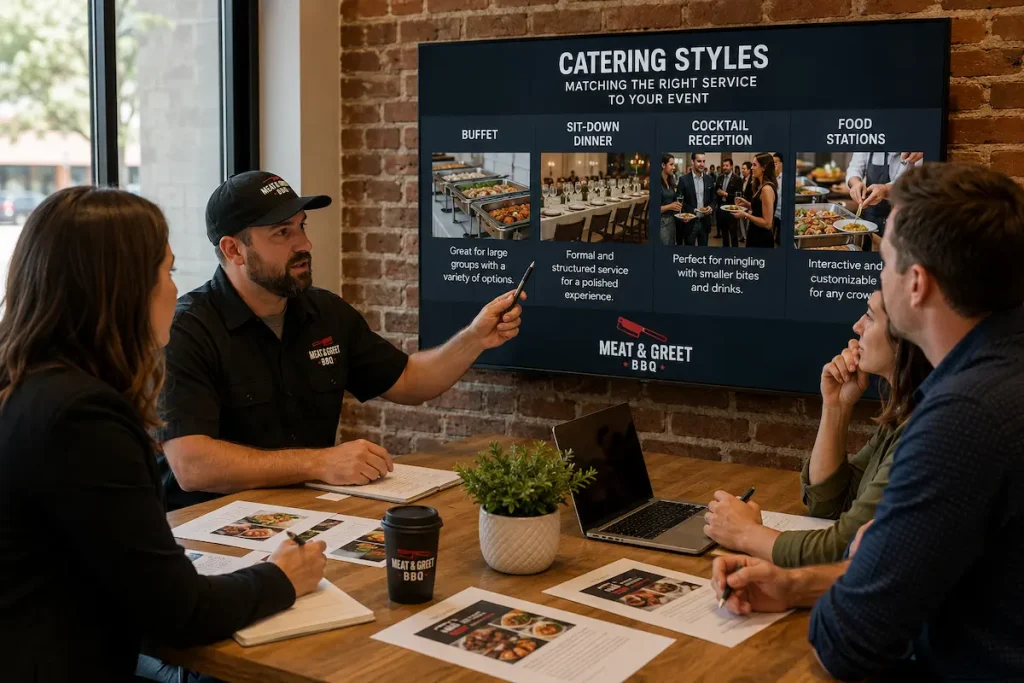
The right catering style matches your event’s formality, guest count, venue layout, and budget while creating smooth service flow that keeps everyone happy and well-fed. A backyard wedding needs a different approach than a corporate lunch. A reunion of fifty people works differently than an intimate dinner for twelve.
Getting this decision right means understanding how different service styles affect everything from timing to guest interaction. The choice between buffet, plated service, or family-style dining shapes the entire atmosphere. It determines how your guests move through space, how long service takes, and whether people feel relaxed or rushed.
Reasons Brisket Reheating Goes Wrong
Brisket transforms from succulent masterpiece to leather boot faster than most caterers expect. The culprit? Heat applied with all the finesse of a sledgehammer.
Most Common Mistakes:
- Temperature too high – Blasting brisket above 325°F extracts moisture like a desert sun
- No moisture barrier – Bare meat dries out within minutes of exposure
- Skipping the wrap – Foil or butcher paper acts as protective armor
- Rushing the process – Low and slow wins this race every time
Direct heat creates tough, stringy meat that guests struggle to chew. The proteins seize up when shocked by rapid temperature changes. A proper reheat requires patience and precision.
Many caterers slice brisket before reheating, which exposes maximum surface area to drying air. Keeping the whole brisket intact preserves internal juices. Slicing should happen moments before service.
The microwave earns its reputation as brisket’s worst enemy. This method heats unevenly and evaporates moisture at an alarming rate. Professional caterers avoid this shortcut entirely.
Time matters just as much as temperature. A cold brisket pulled straight from refrigeration needs gentle warming over 2-3 hours. Quick fixes produce quick disappointments.
Some caterers forget that resting matters during reheating too. Pulling brisket from heat and immediately slicing releases all those carefully preserved juices onto the cutting board instead of plates.
The difference between mediocre and memorable reheated brisket lies in technique. Master these fundamentals and guests will never know the meat wasn’t fresh from the smoker.
Choosing Between Whole or Sliced Reheat
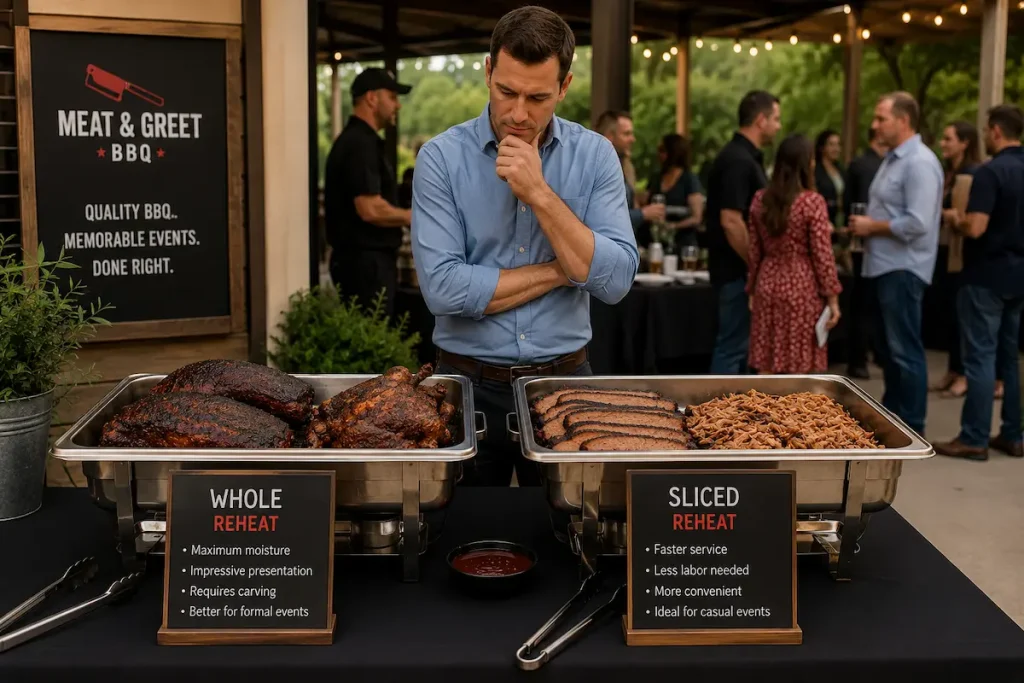
Deciding how meat arrives at an event makes a real difference. Both options have their place in quality catering.
Whole meats come unsliced and ready to carve on-site. This method keeps the protein juicier since cutting exposes more surface area to air and heat. Briskets, pork butts, and whole chickens travel better intact. The presentation also adds theater to the event. Guests appreciate watching a pitmaster carve beautiful slices of beef or pull tender pork.
However, whole meats require extra equipment and skilled hands. Someone needs to break down the proteins properly. This takes time during service.
Sliced meats offer convenience that busy hosts value. Everything comes portioned and ready to serve. No carving station needed. No specialized staff required. The buffet line moves faster when guests simply grab what they want.
The trade-off involves moisture loss. Pre-sliced proteins lose some of their natural juices during transport and holding. Smart caterers minimize this with proper packaging and holding techniques.
| Whole Meats | Sliced Meats |
|---|---|
| Maximum moisture retention | Faster service |
| Impressive presentation | Less labor needed |
| Requires carving expertise | More convenient setup |
| Better for formal events | Ideal for casual gatherings |
Consider the event size and style. Intimate dinners benefit from tableside carving. Large corporate lunches work better with pre-sliced options. Budget matters too—whole meats need additional labor costs while sliced proteins require less staff time.
The guest experience should guide the choice. A wedding deserves the drama of whole roasted meats. A company picnic runs smoother with everything ready to eat.
Oven Method for Moist, Even Heating
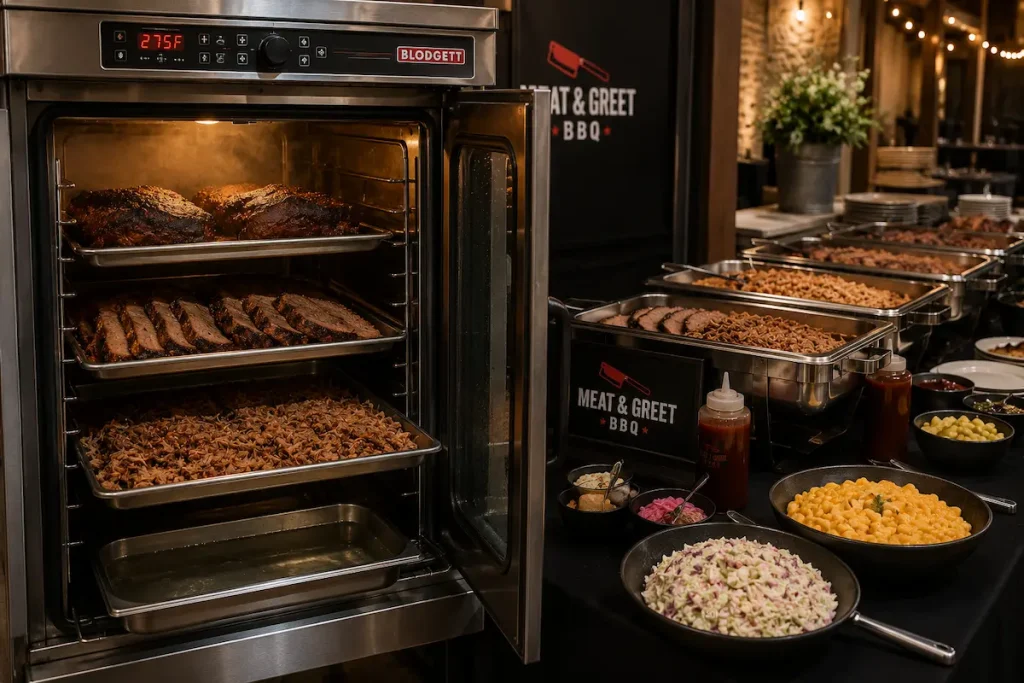
The oven stands as a reliable workhorse for catering operations that demand consistency. Set the temperature between 250°F and 300°F for optimal results with most proteins.
Why This Method Works
Low and slow heat surrounds food from all sides. This creates an even cooking environment that other methods struggle to match. The enclosed space traps moisture while allowing excess steam to escape through vents.
Setup Requirements
| Equipment Needed | Purpose |
|---|---|
| Sheet pans with racks | Elevates meat for air circulation |
| Aluminum foil tents | Prevents surface drying |
| Meat thermometer | Monitors internal temperature |
| Water pan (optional) | Adds humidity to cooking chamber |
Place a shallow pan of water on the bottom rack to maintain humidity levels. This trick prevents barbecue from developing that unfortunate dried-out texture nobody wants at their event.
Timing Considerations
Plan for roughly 45 minutes per pound for larger cuts. Smaller items need watchful attention since they cook faster than expected. Always check internal temperatures rather than relying solely on time estimates.
The real advantage shows up during service. Meats held at proper temperature in warming drawers stay moist for hours. This gives caterers flexibility with timing that outdoor smoking simply cannot provide.
Avoid opening the door frequently. Each peek drops the internal temperature by 25°F or more. Trust the process and your thermometer readings instead of giving in to curiosity.
Sous Vide Precision for Best Texture
Sous vide transforms BBQ catering from guesswork into science. This French cooking technique involves sealing meat in vacuum bags and cooking it in temperature-controlled water baths. The result? Perfectly cooked proteins every single time. From Irving to Plano, DFW caterers are embracing sous vide for large-scale events.
Traditional BBQ methods can dry out expensive cuts or leave them unevenly cooked. Sous vide eliminates these problems by maintaining exact temperatures for hours. A brisket cooked at 155°F for 24 hours develops incredible tenderness while retaining all its natural juices.
Key advantages for catered events:
- Consistent results across hundreds of servings
- Prepare proteins days in advance without quality loss
- Free up grill space for finishing touches
- Reduce food waste from overcooked portions
The technique works brilliantly for high-end BBQ catering. Ribs can be pre-cooked sous vide at 165°F for 12 hours, then quickly finished on a smoker for that essential char and bark. Guests get fall-off-the-bone texture with authentic smokehouse flavor.
Timing becomes remarkably flexible too. Meats hold at serving temperature in their water baths without overcooking. This eliminates the stress of coordinating multiple dishes for large events.
Smart caterers combine sous vide precision with traditional smoking methods. The water bath handles the heavy lifting of breaking down tough connective tissues. The grill or smoker adds the final layer of flavor and appearance that guests expect from the premium BBQ experience DFW clients expect.
This hybrid approach delivers restaurant-quality results at scale, something traditional methods struggle to achieve consistently.
Restoring Bark with a Skillet Finish
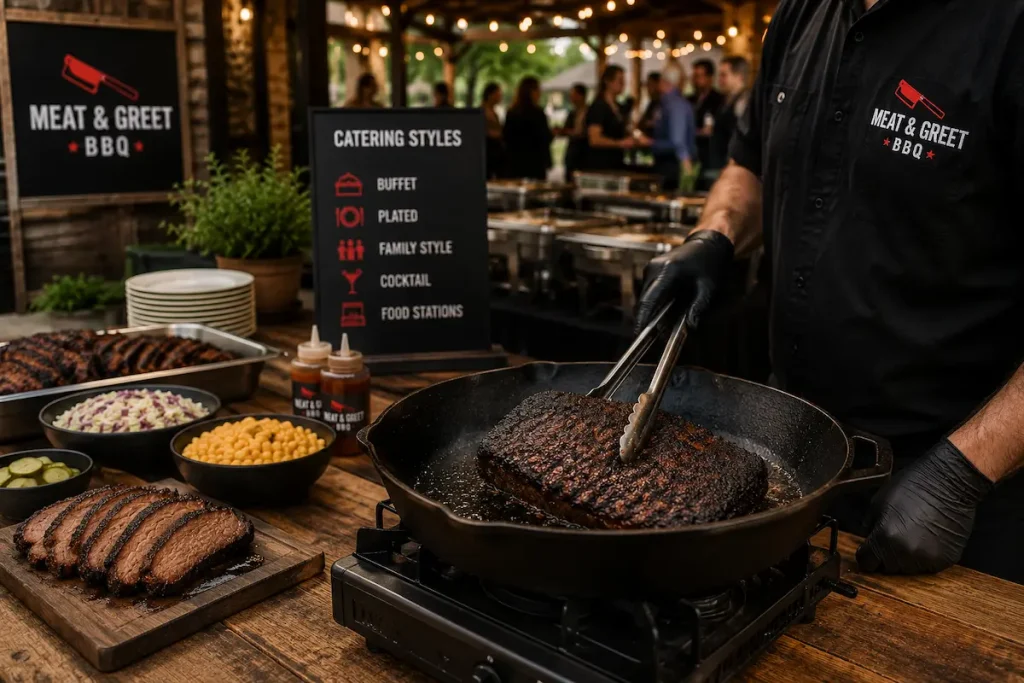
When smoked brisket loses its prized bark during transport or resting, a cast-iron skillet offers salvation — especially for on-site BBQ catering in Bedford and Cedar Hill. This technique works particularly well for catering events where meat travels before service.
Heat a cast-iron skillet over medium-high until it just begins to smoke. The surface needs proper heat to recreate that crusty exterior without cooking the meat further.
The Process:
- Pat the brisket surface completely dry with paper towels
- Place bark-side down in the hot skillet for 45-60 seconds
- Listen for the sizzle—it indicates proper crust formation
- Flip once if both sides need attention
The skillet’s direct heat caramelizes the exterior sugars and renders surface fat quickly. This creates a texture similar to the original bark without penetrating deep into the meat. Professional caterers use this method backstage at events when bark softens from steam table humidity.
Critical considerations include monitoring the internal temperature. A probe thermometer ensures the meat stays within the ideal serving range of 165-175°F. The goal is surface restoration, not continued cooking.
This technique also revives bark on pork shoulder and ribs. The key lies in brief contact with high heat. Thirty seconds can make the difference between limp exterior and proper crust.
For large events, multiple skillets on portable burners allow rapid bark restoration across several briskets. The method takes practice but becomes second nature after a few attempts.
Avoiding Common Microwave Pitfalls
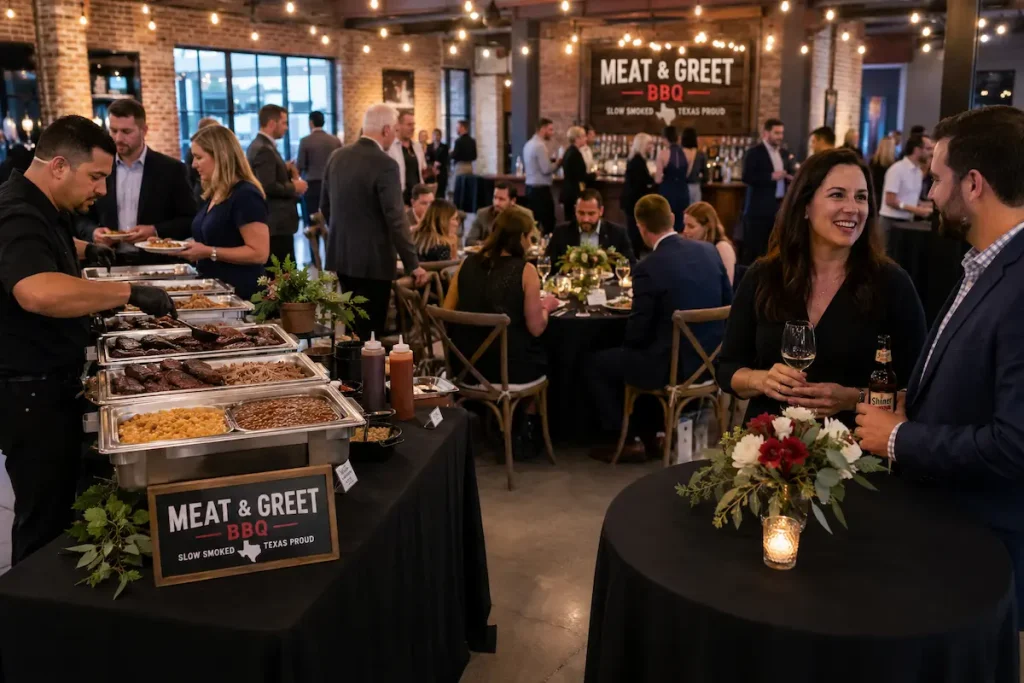
Microwaving catered food seems convenient, but it often transforms premium barbecue into rubbery disappointment. The uneven heating creates hot spots while leaving other portions cold, which ruins carefully smoked meats.
Professional caterers know that microwaves strip moisture from brisket and pulled pork faster than a Texas summer sun. The texture changes from tender to tough in seconds. Steam builds up in covered containers, turning crispy bark into soggy mess.
Critical mistakes to sidestep:
- Heating food directly from refrigerator temperature
- Using high power settings for delicate proteins
- Leaving meat uncovered during reheating
- Stacking multiple portions in one container
The aroma disappears too. That signature smoke ring and bark develop through hours of low-and-slow cooking — which is why Meat & Greet’s BBQ catering in Cleburne and Mansfield never cuts corners.
Smart event planners request proper warming equipment instead. Chafing dishes, warming trays, and insulated containers maintain quality without compromising taste or texture. These methods preserve the investment made in premium catering. These methods preserve the investment made in premium BBQ catering — whether you’re hosting in Arlington or anywhere across DFW.
Guests notice the difference immediately. Nobody raves about microwaved ribs at Monday morning meetings. They remember the caterer who delivered food that tastes fresh from the smoker.
Some venues only offer microwave access. In these situations, reheat at 50% power in short intervals. Add a small container of water nearby to maintain humidity. Remove portions from aluminum pans first, as metal and microwaves make terrible dance partners.
The goal remains simple: serve barbecue that honors the craft behind it.
Selecting the Right Moisture Boosters
Moisture boosters have nothing to do with catering styles, but they matter deeply when smoke meets meat. These products keep proteins juicy during long cook times.
Professional caterers rely on three main types. Injection marinades work from the inside out, delivering flavor and moisture directly into the muscle fibers. Spritz bottles filled with apple juice, vinegar, or beer help maintain surface moisture during smoking. Butter-based bastes add richness while creating a protective layer against dry heat.
The choice depends on the protein and cooking method:
- Brisket benefits from beef broth injections with Worcestershire sauce
- Pork shoulders respond well to apple cider spritzes every 45 minutes
- Chicken thrives with herb butter bastes during the final hour
Texas-style purists might scoff at moisture boosters. They argue that proper fire management eliminates the need for “training wheels.” But even stubborn traditionalists keep a spray bottle nearby when the wind picks up.
The key is timing. Injections go in 12 hours before cooking. Spritzes start after the bark forms, usually around hour three. Bastes come late in the game to avoid washing away carefully developed crust.
Quality matters more than quantity. A light mist beats a heavy dousing that steams the meat. The goal is enhancement, not waterlogging.
Smart caterers test moisture boosters during prep runs, not at client events. Each protein responds differently, and recipes need adjustments based on smoker type, weather conditions, and guest preferences. Whether you’re serving brisket in Grand Prairie or pulled pork in DeSoto, matching the right moisture technique to your protein makes all the difference.
Expert Freezing and Thawing Techniques
Professional caterers know that proper freezing saves time without sacrificing quality. The key lies in preparation and timing.
Best Practices for Freezing Prepared Foods:
- Portion meats into meal-sized amounts before freezing
- Wrap items tightly in plastic wrap, then aluminum foil
- Label everything with contents and date
- Remove as much air as possible to prevent freezer burn
- Store at 0°F or below for optimal preservation
Smoked brisket and pulled pork freeze exceptionally well for up to three months — a technique Meat & Greet regularly uses for large events in Midlothian and surrounding areas. Ribs maintain their texture for about two months when wrapped properly.
The thawing process demands patience. Never thaw meat at room temperature, as this invites bacterial growth. Instead, plan ahead and transfer frozen items to the refrigerator 24-48 hours before the event.
| Food Item | Refrigerator Thaw Time |
|---|---|
| Whole brisket | 24-36 hours |
| Pulled pork | 12-24 hours |
| Ribs | 18-24 hours |
| Sauces | 8-12 hours |
Cold water thawing works faster in emergencies. Submerge sealed packages in cold water, changing the water every 30 minutes. A five-pound brisket thaws in roughly three hours using this method.
Reheating requires gentle warmth to preserve moisture. Low oven temperatures between 250-275°F work best. Add a splash of liquid to prevent drying. Steam tables maintain serving temperature without overcooking.
Sauce and sides often freeze better than proteins. Mac and cheese, beans, and coleslaw all handle freezing well with minimal texture changes.
Catering for Crowds: Efficient Reheat Strategies
Large events demand precision when warming food. The difference between tender brisket and dry leather often comes down to proper reheating technique.
Timing proves critical. Most proteins need 30-45 minutes in a warming oven set between 225°F and 275°F. Wrapping meats in foil with a splash of apple juice or beef stock preserves moisture without creating soggy bark.
Staging areas work wonders for crowd management. Smart caterers divide quantities into smaller batches, rotating fresh pans every 20 minutes rather than letting everything sit under heat lamps for hours.
| Method | Best For | Temperature | Time |
|---|---|---|---|
| Alto-Shaam | All proteins | 140°F hold | Continuous |
| Cambro boxes | Transport | N/A | 2-3 hours |
| Chafing dishes | Sides | 180°F water | Service period |
| Warming ovens | Pulled pork, brisket | 250°F | 30-45 min |
Equipment matters more than caterers admit. Commercial warmers maintain consistent temperatures without creating hot spots. Home-grade solutions fail under pressure when serving 200 guests.
The secret lies in slight undercooking at the primary location. Proteins finish cooking during transport and reheating, hitting perfect doneness exactly when guests arrive. This approach requires experience and nerve.
Never reheat more than needed for the next service window. Sauces should stay separate until plating to prevent soggy textures. Resting periods between warming cycles give proteins time to redistribute juices naturally.
Professional operations invest in quality thermometers. Guesswork creates disasters. Internal temperatures tell the real story, not clocks or appearance alone.
Pitmaster Tips and Underground Tricks
Real pitmasters guard their secrets like treasure maps. But a few techniques separate backyard grilling from professional catering.
Temperature control matters more than most people realize. Experienced caterers maintain steady heat between 225°F and 250°F for most meats. They never chase the clock—meat finishes when it’s ready, not when the timer beeps. It’s a standard Meat & Greet practices across all DFW service areas, including Garland.
The best pitmasters know wood selection changes everything. Hickory delivers bold flavor for beef and pork, while apple wood brings subtle sweetness to chicken and fish. Mixing woods creates layers of taste that guests notice but can’t quite identify.
Here’s what separates amateur from professional:
| Professional Move | Why It Works |
|---|---|
| Wrap brisket in butcher paper | Keeps bark crispy while meat stays moist |
| Rest meat 30-60 minutes | Juices redistribute evenly throughout |
| Trim fat to 1/4 inch | Perfect balance of flavor and rendering |
The “Texas crutch” remains controversial but effective. Wrapping meat in foil during the stall speeds cooking without sacrificing much texture. Smart caterers use this trick when timing matters.
Dry rubs should sit on meat overnight. Salt pulls moisture to the surface, then reabsorbs with the spices. This creates better bark and deeper seasoning.
Most caterers won’t admit this: letting meat sit uncovered in the refrigerator for 12 hours dries the surface. Dry surfaces caramelize better than wet ones. It’s simple chemistry that makes dramatic differences in finished products.
Visual Guide: Method Matrix
Selecting a catering method shapes the entire guest experience. The matrix below breaks down four primary styles based on formality and service level.
| Catering Style | Formality Level | Guest Count | Service Speed | Staff Required |
|---|---|---|---|---|
| Buffet | Casual to Moderate | 50-200+ | Fast | Minimal |
| Plated Service | Formal | 20-150 | Moderate | High |
| Family Style | Moderate | 20-80 | Moderate | Moderate |
| Food Stations | Casual to Moderate | 75-300+ | Fast | Minimal to Moderate |
Buffet service works best for large gatherings where variety matters more than precision. Guests move at their own pace, filling plates with what appeals to them most.
Plated service delivers elegance. Each course arrives at the table in timed intervals. This method suits weddings, galas, and corporate dinners where presentation counts.
Family-style dining creates intimacy. Large platters land on each table, encouraging conversation and sharing. The approach feels warm without sacrificing quality.
Food stations offer flexibility and theater. A carving station here, a taco bar there—guests wander between options. This style keeps people moving and mingling throughout the event.
Key Considerations:
- Budget increases with staff-intensive methods
- Venue layout affects station placement and flow
- Guest demographics influence comfort with self-service
- Menu complexity determines feasibility of each style
The right choice depends on matching these factors to event goals. A backyard celebration calls for different treatment than a corporate function.
Essential Brisket Reheating Guidelines
Properly reheated brisket maintains its quality and flavor. The key lies in low, gentle heat and moisture retention.
Oven Method (Recommended)
Set the oven to 325°F. Wrap the brisket tightly in aluminum foil with a splash of beef broth or water. Place it in a shallow pan and heat for approximately 1 hour per pound of meat. The internal temperature should reach 165°F.
Smoker Technique
For those seeking to restore that authentic smokehouse character, a smoker works beautifully. Maintain temperatures between 225-250°F. Wrap the meat in butcher paper or foil with minimal liquid. This method takes longer but rewards patience with superior texture.
Timing Matters
| Brisket Weight | Reheat Time (Oven) | Target Temp |
|---|---|---|
| 2-3 lbs | 60-90 minutes | 165°F |
| 4-5 lbs | 2-2.5 hours | 165°F |
| 6+ lbs | 3+ hours | 165°F |
Never rush the process with high heat. Rapid reheating dries out the meat and destroys hours of careful preparation.
Storage Before Reheating
Refrigerate brisket within two hours of cooking. Store it whole rather than sliced to preserve moisture. The meat keeps for 3-4 days refrigerated or up to 3 months frozen.
The Slice Debate
Slicing before or after reheating impacts results. Whole briskets retain more moisture during reheating. However, pre-sliced portions heat faster and more evenly when arranged in a single layer with broth poured between slices.
A meat thermometer eliminates guesswork and prevents serving cold or overheated brisket to guests.
Frequently Asked Questions
Choosing the right catering approach involves understanding your budget, venue requirements, guest preferences, and the level of service that matches your event’s atmosphere. The answers below address common concerns about selecting caterers, determining appropriate service styles, and managing practical details like portions and package inclusions.
What factors should I consider when selecting a BBQ catering service for my DFW event?
Venue logistics play a critical role in catering decisions. Limited kitchen access might eliminate certain service styles that require extensive on-site preparation.
Guest count directly affects which DFW BBQ catering services can handle the workload efficiently. A caterer experienced with intimate gatherings of twenty may struggle with a two-hundred-person wedding.
Menu flexibility reveals a caterer’s true capabilities. The best event caterers customize offerings around seasonal ingredients and accommodate dietary restrictions without treating special requests as burdens.
References and tastings separate mediocre providers from exceptional ones. Tasting sessions demonstrate quality, portion sizes, and presentation standards before signing contracts.
Which catering styles work best for different event formats, such as corporate meetings, weddings, or private parties?
Corporate meetings benefit from plated service when formality matters or time constraints demand efficiency. Attendees receive identical portions simultaneously, keeping everyone on schedule.
Buffet catering suits weddings with diverse guest preferences and varying appetites. Food stations allow guests to customize plates while creating natural mingling opportunities during service.
Private parties thrive with family-style dining when hosts want relaxed, communal dining experiences. Shared platters encourage conversation and create warmth that plated dinners rarely achieve.
Cocktail-style appetizers work brilliantly for networking events where guests circulate rather than sit. Action stations like carving stations or taco bars add entertainment value while feeding crowds.
How do I decide between buffet, plated service, family-style, stations, or cocktail-style appetizers?
Budget constraints often narrow options quickly. Plated meals typically cost more due to staffing requirements, while buffet style reduces labor expenses.
Event formality guides appropriate choices. Black-tie galas demand the elegance of plated dinners, whereas casual celebrations welcome the informality of buffet service.
Venue layout impacts feasibility. Tight spaces struggle to accommodate buffets with chafing dishes, making plated catering or stations more practical.
Guest demographics matter more than planners realize. Elderly attendees may find navigating buffets challenging, while younger crowds enjoy the movement and variety of food stations.
Interaction goals shape smart decisions. Family-style service sparks table conversation naturally. A pasta station creates buzz as guests watch preparations unfold.
What questions should I ask a caterer about menu customization, dietary restrictions, and allergy accommodations?
Request specific examples of past menu modifications for restricted diets. Generic assurances mean little compared to actual gluten-free, vegan, or kosher execution.
Ask how the catering service identifies and separates allergen-friendly dishes during buffet service. Cross-contamination poses real risks that careful protocols prevent.
Clarify whether dietary accommodations incur additional fees. Transparent pricing prevents awkward surprises when invoices arrive.
Inquire about ingredient sourcing and preparation methods. Quality caterers gladly discuss their suppliers and cooking techniques.
Determine notification deadlines for final headcounts and dietary needs. Most event caterers require this information several days before the event.
How can I estimate the right amount of food and beverages for my guest count and event duration?
Event duration significantly impacts consumption calculations. Guests at four-hour receptions eat substantially more than those attending ninety-minute gatherings.
Service style affects portion planning. Buffet catering requires fifteen to twenty percent extra food since guests often take larger servings than plated portions provide.
Meal timing influences appetite levels. Midday events need lighter fare than evening dinners when guests arrive hungry.
Beverage calculations depend on demographics and event nature. Professional gatherings average two drinks per person hourly, while celebrations may require more.
A carving station typically yields eight to ten ounces of meat per guest when served alongside other dishes. As standalone entrees, plan twelve to sixteen ounces per person.
What is typically included in catering packages, such as rentals, staffing, setup, and cleanup?
Basic packages usually cover food preparation, delivery, and standard serving equipment. Chafing dishes, serving utensils, and basic display pieces come standard with most buffet service.
Staffing levels vary dramatically between packages. Plated service requires more servers than self-service buffets, affecting both logistics and costs.
Setup and breakdown services often appear as package tiers. Premium options include complete table arrangements, while basic packages stop at food placement.
Rentals like linens, plateware, and glassware may cost extra beyond standard catering services. Clarify what the base price includes before comparing quotes.
Carving stations and action stations frequently require additional fees for specialized staff. These interactive elements enhance experiences but add labor costs that basic buffet style avoids.