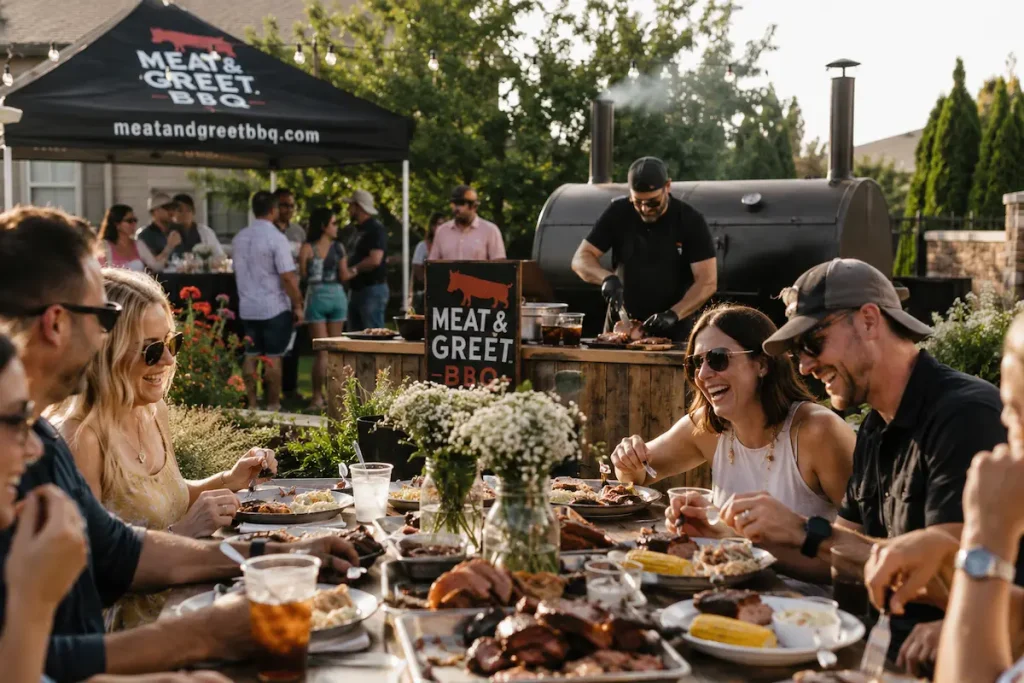
Most people think great BBQ catering is just about the food. They’re wrong. When done right, a BBQ catering event transforms a simple gathering into an experience guests talk about for years—the smell of on-site grilling mixing with laughter, the sight of perfectly charred meats glistening under the sun, and that moment when someone takes their first bite and goes completely silent.
One guest described their backyard BBQ last summer as “organized chaos in the best possible way.” The caterer arrived early, set up smokers that became conversation pieces, and somehow made feeding sixty people look effortless. Kids played lawn games while adults circled the grill like moths to a flame. The whole thing felt less like hired help and more like a pit master friend showed up to run the show.
Full-service catering means more than dropping off aluminum trays and disappearing. It’s about reading the crowd, timing each course so brisket doesn’t sit cold, and knowing when to refresh the buffet without interrupting the flow. Great BBQ party ideas start with understanding what truly matters: food that tastes like it came straight from the smoker, service that feels invisible until you need it, and an atmosphere that makes everyone forget they’re at a catered event.
Why Reheating Brisket Can Go Wrong – Fast
Brisket walks a tightrope between perfection and disaster when reheated. The meat’s delicate balance of moisture and texture can collapse in minutes.
Most caterers who fail their clients do so at the reheating stage, not the smoker. A beautifully smoked brisket transforms into leather when exposed to direct heat or dry air. The proteins seize up. The rendered fat evaporates.
Common reheating mistakes include:
- Cranking the oven temperature too high (anything over 325°F spells trouble)
- Leaving the brisket uncovered and exposed to air
- Skipping the crucial step of adding liquid to the pan
- Reheating straight from refrigerator temperature
- Using a microwave, which creates hot spots and rubber patches
Temperature swings punish brisket harder than almost any other meat. When cold brisket hits high heat, the exterior dries out before the center warms through. The bark that took hours to develop turns brittle and separates from the meat.
Time matters just as much as temperature. Even at proper heat levels, brisket left too long in the oven loses moisture with each passing minute. The difference between tender and tough often spans just fifteen minutes.
Professional caterers know that reheating requires the same attention as the original cook. They monitor internal temperatures with precision. They wrap tightly in foil with beef broth or au jus. They bring meat closer to room temperature before applying heat.
The margin for error shrinks dramatically once brisket cools. What forgave mistakes during the initial smoke shows no mercy the second time around.
Whole Vs. Sliced: Start With the Right Format
The presentation of BBQ meat sets the tone before guests take their first bite. Choosing between whole cuts and pre-sliced portions affects everything from visual impact to temperature retention.
Whole briskets, pork shoulders, and ribs create an undeniable centerpiece. They hold heat longer and maintain moisture better than sliced alternatives. The bark stays crispy, and the meat doesn’t dry out from exposure.
But whole cuts demand more from guests. They need to navigate carving stations or serve themselves, which can slow service during peak times.
Pre-sliced options offer convenience and speed. Guests move through buffet lines faster, and portion control becomes easier for the caterer. Each slice gets plated with consistent thickness, ensuring fair distribution.
Format Selection Guide:
| Whole Cuts | Pre-Sliced |
|---|---|
| Better moisture retention | Faster service |
| Impressive visual display | Easier portion control |
| Requires carving skills | Less intimidating for guests |
| Stays warm longer | Quick buffet lines |
The crowd size matters here. Intimate gatherings benefit from the theatre of whole cuts. Large corporate events run smoother with pre-sliced meats arranged on platters.
Some caterers split the difference. They slice half the brisket for the buffet line while keeping a whole piece on display. This hybrid approach combines efficiency with showmanship.
The choice isn’t about right or wrong. It’s about matching format to the event’s rhythm and the host’s priorities.
Low-and-Slow in the Oven: The Classic Pitmaster Method
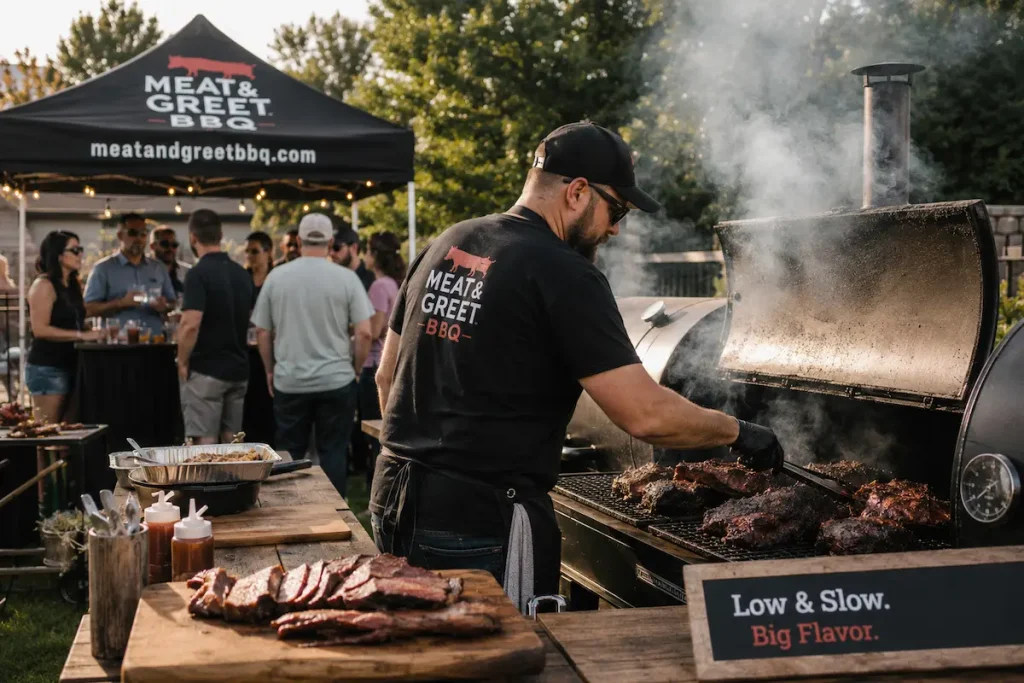
The pitmaster approach demands patience. Traditional slow-smoked brisket requires hours of careful temperature management, typically between 225°F and 250°F. This isn’t a rushed process.
Most caterers who excel at smoked brisket follow a simple principle: time transforms tough cuts into tender masterpieces. The collagen in brisket breaks down gradually, creating that signature pull-apart texture guests rave about. It’s chemistry at work, not magic.
Key elements include:
- Consistent heat maintenance
- Proper wood selection for smoke flavor
- Internal temperature monitoring (aim for 203°F)
- Adequate resting period post-cook
The oven method mimics traditional pit smoking when outdoor equipment isn’t practical. Smart caterers wrap their brisket in butcher paper or foil during the stall phase around 165°F. This technique, called the Texas crutch, speeds cooking without sacrificing quality.
A twelve-pound brisket needs roughly twelve to fourteen hours of cooking time. That’s an overnight commitment for morning events. The bark develops through the Maillard reaction, creating those caramelized edges people fight over at the buffet line.
Professional BBQ catering requires understanding these fundamentals. The difference between mediocre and exceptional smoked brisket often comes down to temperature control and timing. Rushing either step produces disappointing results that guests remember for wrong reasons.
Wood choice matters too. Oak provides steady smoke, hickory adds boldness, and fruit woods contribute subtle sweetness. Each selection influences the final flavor profile in distinct ways.
Sous Vide: The Secret Weapon for Perfect Texture
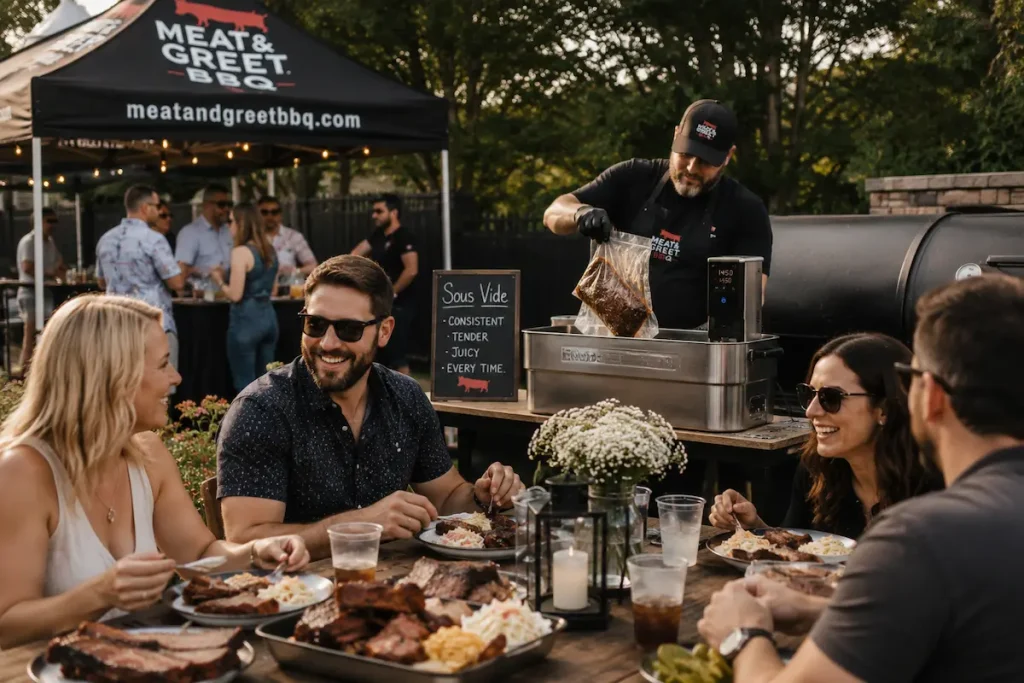
Most caterers won’t admit this, but traditional smoking alone can’t guarantee consistent results for every cut. That’s where sous vide changes everything.
The technique involves vacuum-sealing meat and cooking it in a precisely controlled water bath. Think of it as a safety net that delivers restaurant-quality texture every single time. The brisket comes out fork-tender without any dry spots. The ribs slide off the bone with just enough resistance to show they’re done right.
Here’s what sous vide brings to high-end BBQ catering:
- Temperature precision down to the degree
- Even cooking throughout the entire cut
- Moisture retention that traditional methods can’t match
- Scheduling flexibility for large events
The process starts 24 to 48 hours before service. Meat & Greet BBQ Catering uses sous vide as the foundation, then finishes everything on the smoker. This two-step approach creates the deep smoke flavor guests expect while guaranteeing the texture they deserve.
The water bath does the hard work while the pitmaster focuses on timing and presentation.
Critics say it’s not “authentic” barbecue. Those critics haven’t served 200 guests who all need their brisket at exactly 6 PM. The method isn’t about cutting corners. It’s about respecting both the craft and the client’s investment.
The smoke ring might be slightly different, but the eating experience? That’s where sous vide proves its worth. Guests remember how the meat tasted and felt, not the cooking method listed on a menu.
Skillet Finish: Bringing Back the Bark
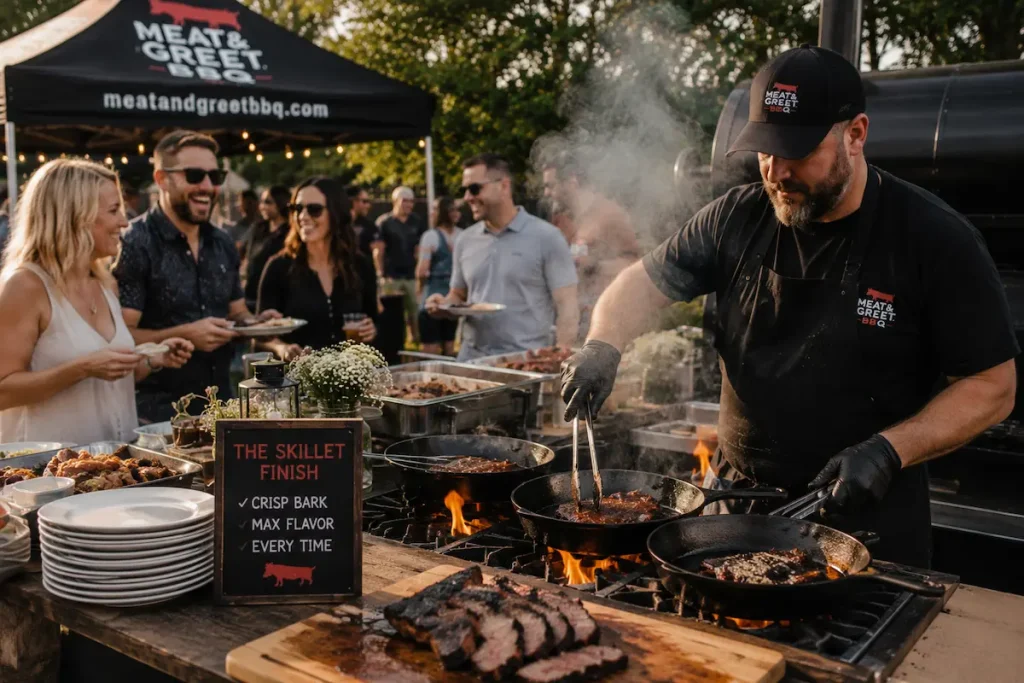
Transport changes everything about smoked meat. The bark that took hours to develop gets soft and soggy inside those warming trays.
Jm Carroll refuses to accept that compromise. His solution involves cast iron skillets and a technique borrowed from steakhouse kitchens.
The method works like this:
- Heat cast iron skillets to medium-high before service
- Place sliced brisket or pulled pork fat-side down for 90 seconds
- Listen for the sizzle that signals bark restoration
- Flip once, then remove immediately
The transformation happens fast. Edges crisp up while the interior stays tender and moist. Fat renders again, creating those caramelized bits guests fight over.
This isn’t reheating. It’s resurrection.
Traditional catering wisdom says keep everything wet and covered. Jm takes the opposite approach. He treats each serving like it’s coming fresh off the smoker.
The difference shows up in texture first. Guests bite through a proper crust instead of mushy meat. Then comes the flavor—those Maillard reactions kick back into gear, bringing smoke and spice forward again.
Some caterers think this extra step costs too much time. They’re wrong. A skilled team can skillet-finish portions throughout service without creating bottlenecks.
The payoff arrives when guests pause mid-conversation to look at their plate. When they take that second bite before swallowing the first. When they ask how barbecue at an event tastes better than most restaurants.
Cast iron doesn’t lie. Neither does proper technique.
Don’t Do This: Microwave Myths and Missteps
Some guests believe reheating barbecue in a microwave preserves its quality. This couldn’t be further from the truth.
Microwaves create hot spots and cold zones that destroy the careful temperature control barbecue demands. The bark—that prized outer crust formed over hours of smoking—turns rubbery within seconds. Brisket that spent twelve hours absorbing hickory smoke becomes a sad, steaming mess.
Common microwave disasters include:
- Dried-out pulled pork that resembles sawdust
- Ribs with gelatinous, unappetizing texture
- Sausages that explode or split open
- Sauce that separates and becomes oily
The moisture distribution in microwaved meat is completely uneven. One bite scalds the tongue while the next remains lukewarm. Professional caterers know this ruins the dining experience entirely.
Proper reheating requires gentle, indirect heat. Low ovens, warming trays, or water baths maintain the meat’s integrity. These methods take longer but respect the craft that went into preparing the food.
Hosts who attempt microwave shortcuts often panic when guests arrive. The telltale signs appear immediately: steam-softened bark, separated sauce pools, and that distinct microwave smell that masks smoke flavor.
Smart event planners trust their caterer’s equipment and timing. They resist the urge to “help” by nuking proteins that demand respect. The microwave has its place in modern kitchens, but that place is nowhere near properly smoked barbecue.
Moisture Boosters: What to Add (and What to Avoid)
Dry BBQ is a caterer’s nightmare. Guests notice immediately when brisket crumbles instead of pulls, when ribs require sawing rather than gentle tugging.
The right moisture boosters make all the difference. Apple juice works wonders in a spray bottle, applied every 30 minutes during the cook. Beef broth adds depth to brisket without overwhelming the smoke. Beer brings a subtle malty sweetness that complements pork shoulder beautifully.
What Actually Works:
- Apple cider vinegar mixed with water (50/50 ratio)
- Unsalted butter for basting during the final hour
- Worcestershire sauce diluted with apple juice
- Plain water with a touch of rub dissolved in it
BBQ sauces deserve special mention. They’re moisture boosters and flavor enhancers, but timing matters. Apply them too early and they’ll burn. Too late and they won’t properly caramelize.
Professional caterers brush sauce during the last 15-20 minutes of cooking. This creates that glossy, sticky exterior guests expect without sacrificing the bark underneath.
Skip These Completely:
- Sugary sodas (they carbonize and turn bitter)
- Honey alone (burns faster than you’d think)
- Olive oil (wrong flavor profile for American BBQ)
- Anything with high sugar content applied early
The worst mistake? Drowning meat to compensate for poor temperature control. Moisture boosters enhance properly cooked meat. They don’t rescue it from amateur mistakes.
Use them strategically, not desperately.
Freezer to Fork: Reheating Frozen Brisket Like a Pro
Frozen brisket doesn’t have to mean compromised flavor. The key lies in patience and proper technique.
The best method starts the night before service. Move the brisket from freezer to refrigerator, allowing 24 hours for a gentle thaw. This slow process preserves moisture and texture that quick-thaw methods destroy.
The Oven Method (Preferred)
Preheat to 325°F. Wrap the thawed brisket in aluminum foil with a few tablespoons of beef broth or apple juice. The liquid creates steam, preventing that dreaded dry texture. Heat for 45-60 minutes until the internal temperature reaches 165°F.
The Sous Vide Approach
For those with the equipment, sous vide delivers restaurant-quality results. Set the water bath to 165°F and submerge the sealed brisket for 90 minutes. The controlled temperature ensures even heating without overcooking.
Quick Tips for Success
- Slice only after reheating to retain more moisture
- Save the original cooking juices for adding back during reheating
- Let the brisket rest for 10 minutes post-reheat before serving
- Avoid microwaves entirely—they turn premium brisket into shoe leather
Professional caterers know that properly frozen and reheated brisket can rival freshly smoked meat. The difference comes down to respecting the process. Temperature control matters. Moisture preservation matters even more.
Smart caterers prep brisket days ahead, freeze at peak quality, then execute flawless reheating on event day. Guests never know the difference, and the caterer maintains sanity during high-pressure service windows.
Party-Ready Reheat: Serving Brisket to a Crowd
Reheating brisket for a gathering requires finesse, not just a microwave button. The meat needs gentle warmth that preserves its tender texture and smoky depth.
The best approach wraps sliced brisket in foil with a splash of beef broth or apple juice. A 250°F oven brings it back to life in about 45 minutes. Whole briskets take longer but stay juicier when reheated intact.
Temperature Guidelines for Reheating:
| Meat Type | Internal Temp | Time at 250°F |
|---|---|---|
| Sliced Brisket | 165°F | 30-45 min |
| Whole Brisket | 165°F | 90-120 min |
| Pulled Pork | 165°F | 45-60 min |
Smoked meats benefit from resting in their wrapping after heating. This redistributes moisture throughout each slice. The same principle applies to pulled pork and bbq ribs.
A complete spread balances these smoky meats with classic sides. Coleslaw cuts through richness while potato salad adds substance. Baked beans and cornbread round out the savory offerings.
Grilled vegetables and corn on the cob provide lighter options. Bbq chicken and jerk chicken give guests variety beyond beef and pork. Some caterers even offer jamaican jerk chicken for adventurous palates.
The secret lies in timing. Brisket should finish reheating 15 minutes before service. This buffer prevents dry edges and cold centers.
Desserts like peach cobbler and apple pie can wait on the counter. They actually taste better at room temperature, which frees up oven space for the star attraction.
Smart caterers prep warming stations that maintain 140°F without cooking the meat further. This keeps everything safe and delicious for hours.
Bonus Tips from the BBQ Underground
Seasoned pitmasters guard their secrets like treasure maps. But a few tricks deserve the spotlight at your next event.
Ask your caterer about reverse searing. This technique transforms tougher cuts into butter-soft masterpieces. The meat cooks low and slow first, then gets a quick blast of high heat. The result? A crust that crackles and an interior that melts.
Temperature matters more than time. Professionals know this. They watch the thermometer, not the clock. Brisket doesn’t care what your schedule says.
Here’s what separates amateur smoke from professional craft:
- Wood selection changes everything – hickory for bold flavors, cherry for subtle sweetness, oak for versatility
- Rest periods aren’t optional – meat needs 20-30 minutes wrapped after cooking
- Bark development requires patience – that dark, flavorful crust takes hours to build properly
Most people overlook the importance of fat caps. Smart pitmasters trim them to exactly a quarter inch. Too much fat means greasy meat. Too little means dry disappointment.
The real magic happens in the wrap. Some use butcher paper, others swear by foil. Each method creates different bark textures and moisture levels. Professional caterers experiment for years to nail their signature approach.
One insider truth: Quality BBQ requires wood that’s been seasoned for at least six months. Green wood creates bitter smoke. Dry wood burns clean and adds the right flavor notes.
These aren’t secrets anymore. They’re standards that separate memorable meals from forgettable ones.
Quick-Glance Method Matrix (Infographic Table)
The right BBQ catering approach transforms a simple meal into an experience guests remember. Different methods deliver distinct flavors and textures that match specific event needs.
| Cooking Method | Best For | Flavor Profile | Cooking Time |
|---|---|---|---|
| Low & Slow Smoking | Brisket, ribs, pork shoulder | Deep smoke penetration with bark formation | 8-16 hours |
| Direct Grilling | Chicken, sausages, vegetables | Charred exterior with quick caramelization | 15-45 minutes |
| Indirect Heat | Whole hogs, turkey | Even cooking with gentle smoke infusion | 4-8 hours |
| Hot & Fast | Pork chops, steaks | Crusty sear with juicy interior | 30-90 minutes |
Each technique serves a purpose. Low and slow smoking breaks down tough connective tissue while building layers of smoke flavor. Direct grilling creates those coveted grill marks that make mouths water.
The matrix helps hosts understand what they’re ordering. A brisket can’t be rushed, nor should chicken be cooked for twelve hours. Smart caterers match the method to the meat, the timeline to the event, and the technique to the desired outcome.
Temperature control separates amateur backyard cooks from professional pit masters. Consistency matters when feeding fifty people versus five. The method chosen impacts not just taste but also timing, presentation, and guest satisfaction.
Final Bite: The Brisket Reheat Rulebook
Leftover brisket doesn’t have to taste like regret. The key is treating it with the same respect it received in the smoker.
Moisture is everything. Wrap slices in foil with a tablespoon of beef broth or the reserved juices from the original cook. This creates a steam pocket that brings the meat back to life without drying it out.
The oven method works best at 325°F for about 20 minutes. Low and slow wins again, even on day two.
| Method | Temperature | Time | Best For |
|---|---|---|---|
| Oven (foil-wrapped) | 325°F | 15-20 min | Whole portions |
| Stovetop (skillet) | Medium-low | 5-7 min | Individual slices |
| Sous vide | 165°F | 45 min | Perfect texture retention |
For those feeling adventurous, a quick sear in a cast-iron skillet adds a fresh bark. Just thirty seconds per side over medium-high heat creates that crispy exterior guests expect.
Never use a microwave. It turns tender brisket into shoe leather faster than you can say “dry rub.”
The professionals at Meat & Greet BBQ Catering portion leftovers within two hours of service. They store them in airtight containers with fat cap still attached when possible. Fat equals flavor and protection during reheating.
Room temperature brisket reheats more evenly than refrigerator-cold meat. Let it sit out for twenty minutes before applying heat.
Frequently Asked Questions
Guests wonder about portions, pricing, and what makes BBQ catering truly shine. These answers address the most common questions from a seasoned caterer’s perspective.
What do guests typically notice first when BBQ catering is done well?
The aroma hits first. Smoke and spices travel fast, setting expectations before anyone reaches the serving line.
Guests then observe the setup. Clean stations, properly labeled dishes, and well-organized serving utensils signal professionalism. Temperature matters too—guests notice when meats arrive steaming hot and sides maintain their intended warmth or chill.
Presentation ranks high on the list. Brisket sliced to proper thickness, ribs with visible smoke rings, and sides arranged in attractive serving vessels demonstrate care. When a bbq caterer pays attention to these details, guests feel valued before taking their first bite.
How much BBQ should be served per person to keep guests satisfied without excessive leftovers?
Half a pound of meat per adult works for most events. This accounts for bone-in options like ribs, which reduce the actual edible portion.
For a 50-person event, plan on 25 pounds of total meat. Mix proteins to satisfy different preferences—perhaps 40% brisket, 30% pulled pork, and 30% chicken. Kids typically eat one-third to half of adult portions.
Side dishes add another half pound per person. Three to four sides give guests variety without overwhelming the table. This formula keeps people satisfied while minimizing waste, though slightly hungry crowds at casual events might push toward three-quarters of a pound per person.
What menu options and sides make a BBQ catering spread feel complete to most guests?
A traditional bbq menu includes at least two proteins. Brisket and pulled pork form the classic duo, though ribs and smoked chicken add variety. Sausage serves as an excellent third option.
Four sides create balance. Coleslaw provides crunch and cuts through rich meats. Baked beans or smoked beans add heartiness. Mac and cheese satisfies comfort food lovers. Potato salad or corn on the cob rounds out the spread.
Bread matters more than people realize. Soft rolls or Texas toast help guests build sandwiches and soak up sauces. Pickles, onions, and jalapeños belong on the table too.
A complete bbq catering menu addresses dietary restrictions. BBQ tofu or portobello mushrooms work for vegetarians. Gluten-free options and clearly marked allergens show thoughtfulness. Smart caterers always ask about restrictions during planning.
How much does BBQ catering usually cost for an event of around 50 people?
Professional BBQ catering for 50 guests ranges from $750 to $1,500. The price depends on protein choices, service style, and included amenities.
Basic packages with pulled pork, chicken, and standard sides sit at the lower end. Premium options featuring brisket, ribs, upgraded sides, and full-service staff push costs higher. Equipment rental, disposable plates, and cleanup services add to the total.
Per-person pricing typically falls between $15 and $30. A bbq caterer charging less than $12 per person likely cuts corners on meat quality or portion sizes. Those above $35 per person usually include premium proteins, extensive sides, or additional services like bartending.
Travel distance affects pricing too. Events requiring significant setup time or remote locations may incur extra fees. Hosts planning events in Arlington, TX or anywhere across the DFW area can compare local quotes to get a clear picture of current market rates.
What are some unique BBQ catering ideas that make an event feel memorable for guests?
Live carving stations create theater. Watching a pitmaster slice brisket or pull apart ribs adds an interactive element that pre-plated meals lack. Guests appreciate the showmanship and guaranteed freshness.
Regional variety sparks conversation. Offering both Texas-style brisket and Carolina-style pulled pork with vinegar sauce gives guests a taste tour. Kansas City burnt ends or Memphis dry-rub ribs introduce different traditions.
Build-your-own stations empower guests. A taco bar with smoked meats, a loaded baked potato station, or a barbecue sandwich bar with multiple sauces lets people customize their meals. This approach accommodates picky eaters and adventurous diners alike.
Unexpected proteins surprise guests. Smoked turkey breast, lamb ribs, or even salmon show range beyond standard bbq menus. These options also help accommodate dietary restrictions while maintaining the smoky theme.
Signature sauces distinguish good caterers from great ones. Offering house-made varieties—maybe a spicy habanero, a sweet bourbon glaze, and a tangy mustard base—gives guests options they won’t find elsewhere.
What should hosts ask guests to bring, if anything, to support a well-run barbecue?
Professional bbq catering requires nothing from guests. The caterer provides food, serving equipment, and necessary supplies. This hands-off approach lets the host enjoy their event.
For hybrid events where the host supplements catering, beverages work best. Asking guests to bring their preferred drinks keeps costs down without compromising food quality. Beer, wine, or specialty sodas let guests contribute without creating coordination headaches.
Desserts also work as guest contributions. Since most bbq caterers focus on savory items, homemade pies or cookies add a personal touch. This approach works particularly well for casual gatherings or tailgate menu situations where potluck elements feel natural.
Chairs or coolers make sense for outdoor events in parks or large properties. Comfort items fall outside typical catering packages, so guest help proves practical. Clear communication prevents confusion about what the caterer provides versus what guests should bring.